A slab leak is one of the hardest plumbing problems to detect because it’s hidden. The pipes run under the concrete foundation, buried several inches down. By the time there’s visible damage, the leak has usually been going on for a while.
Las Vegas homes are especially vulnerable. The “caliche” soil shifts as it dries and rehydrates, placing constant physical stress on buried copper pipes. The water here is also extremely hard, with a high mineral content that can corrode the inside of pipes over time. Ignore the signs of a slab leak long enough, and you’re not just dealing with a plumber. You’re dealing with structural damage to the foundation.
Slab leak detection Las Vegas specialists see this regularly. Catching it early is what keeps a manageable repair from turning into a serious one.
How To Spot A Slab Leak Before It Destroys Your Foundation
You can’t see the pipes, so you look for what they leave behind. Here are the main things to watch for:
- A sudden jump in your water bill. If nothing changed in your household routine but the bill doubled, water is escaping somewhere. A high water bill slab leak is one of the most common early signs – a pinhole leak under pressure can waste over 10,000 gallons in a single month.
- A hot spot on the floor. Walk across your tile or laminate flooring barefoot. Feel a patch that’s noticeably warmer than the rest? That’s a hot spot on the floor: a water leak from a hot water line, heating the soil and concrete above it.
- The sound of running water when nothing is on. A faint hissing or rushing sound with every faucet turned off is a clear signal.
- Damp flooring or mold at the baseboards. Moisture working up through the slab shows up here first.
- New cracks in drywall or stucco. When saturated soil shifts beneath the foundation, the structure above it moves as well.
These signs of a slab leak don’t always appear at the same time. Often it starts with one – a slightly higher bill, a warm floor – and others follow over weeks.
Why Your Water Bill Keeps Rising Without Explanation
Rising utility costs are easy to blame on rate increases or seasonal changes. But a high water bill slab leak is often what’s actually happening. In Las Vegas, water pressure is kept high to serve a large and growing city in the desert. When a pipe develops even a small hole, the municipal pressure turns it into something close to a high-pressure nozzle running 24 hours a day.
That water goes into the soil under your home. It doesn’t just run up your bill – it washes away the fine particles that support the concrete slab. When enough of that material erodes, the slab starts to lose its support. That’s when you start seeing cracks and structural movement that costs far more to fix than the original pipe.
Check your water meter when nothing in the house is running. If the leak indicator dial is moving, call for slab leak detection in Las Vegas before the bill climbs further.
Hot Spots On Your Floor Are A Red Flag
A hot spot on the floor, a water leak, is one of the clearest signs of a slab leak, and one of the most specific. It only happens when the hot water line is leaking. The escaping water heats the surrounding soil, and concrete conducts heat well enough that you feel it through the floor covering above.
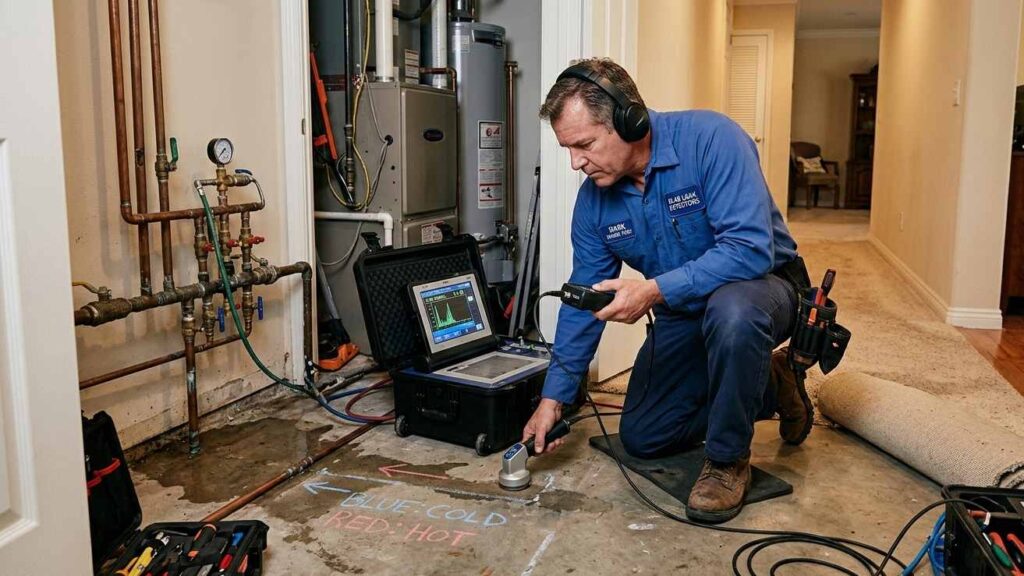
In the past, finding the source meant guessing and jackhammering multiple spots. Modern slab leak detection in Las Vegas uses thermal imaging cameras that show the heat pattern under the floor, and acoustic equipment that listens through the concrete. Between the two, a technician can locate the exact break without moving furniture or opening up the floor unnecessarily.
A hot spot on the floor water leak caught early means a targeted repair. Left for months, the same leak can lead to shifting soil, foundation movement, and a much bigger job.
What Causes Slab Leaks In Las Vegas Homes
Two main factors make Las Vegas homes more prone to slab leaks than most of the country.
- The soil. It’s “expansive” – it swells when wet and shrinks when dry. That constant movement shifts the pipes buried underneath. Over the years, the pipe rubs against rocks or the concrete, and the friction wears it down.
- The water. Las Vegas has extremely hard water. The minerals in it react with older copper pipe walls and slowly corrode them from the inside. The pipe gets thinner until a pinhole forms. Add high water pressure to a weakened pipe, and it’s only a matter of time.
This is why the signs of a slab leak tend to appear gradually. A slightly higher bill one month. A hot spot on the floor, a water leak a few weeks later. The leak was there the whole time, just getting worse.
Slab Leak Repair Options And What They Cost
Once a leak is confirmed, there are a few ways to fix it. The right approach depends on the pipe’s age, location, and how bad the damage is:
- Spot repair – opening the slab at the exact leak location and replacing the damaged section. Common fix for newer homes with otherwise good pipes.
- Pipe rerouting – running a new line through walls or the attic instead of breaking the floor. Often preferred when the flooring is expensive or the pipe is in a difficult spot.
- Epoxy lining – a coating pumped through the pipe to seal the leak from the inside. Works well for certain situations.
- Full repipe – replacing the whole system. The most expensive option, but often the most cost-effective long-term, when pipes are old and corroding throughout.
The slab leak cost Las Vegas homeowners typically see runs from around $600 to $4,000 or more. A simple spot repair lands on the lower end. A full reroute or repipe of a large home will be on the higher end. The depth of the pipe, the type of flooring, and how long the leak has been running all affect the final number. Many homeowners’ insurance policies cover “cost of access” – meaning the demolition and repair of the concrete and flooring, which can take a significant chunk off the bill.
Why Fast Slab Leak Detection Saves You Money
Every month a slab leak runs, the repair gets more expensive. The water keeps eroding soil, the foundation keeps shifting, and eventually you’re dealing with doors that won’t close and windows that crack. Foundation leveling can cost five times as much as a standard slab leak repair in Las Vegas.
The slab leak detection cost in Las Vegas is relatively low, and modern equipment makes it fast – most leaks are located within an hour or two using acoustic and thermal tools. That’s a small investment compared to what would happen if the leak ran for another six months.If you’re seeing any of the warning signs – a rising bill, a warm floor, sounds of water with everything off – Leak Experts USA offers slab leak detection in Las Vegas and slab leak repair Las Vegas services across the valley.