Las Vegas and winter – sounds pretty funny, right? What kind of frosts could there be in the desert? It’s just a joke. And that’s what most homeowners here think. That’s why plumbers in Vegas work 7 days a week in January and February.
In winter, the temperature drops much lower at night than people expect. It doesn’t drop below zero every day, but it does happen. And the houses here were built for heat, not cold. Pipe insulation? Minimal. Protection for outdoor utilities? Often nonexistent. One cold night, a pipe bursts or cracks, leaking quietly for months until you see mold or get a bill twice as high as usual.
Winter leaks aren’t a Minnesota problem. They’re a Vegas problem, but people here aren’t prepared for them. But we’ll help you understand what’s wrong, how to prevent damage, and what to do if you already leak.
Why Winter Leaks Happen in Las Vegas
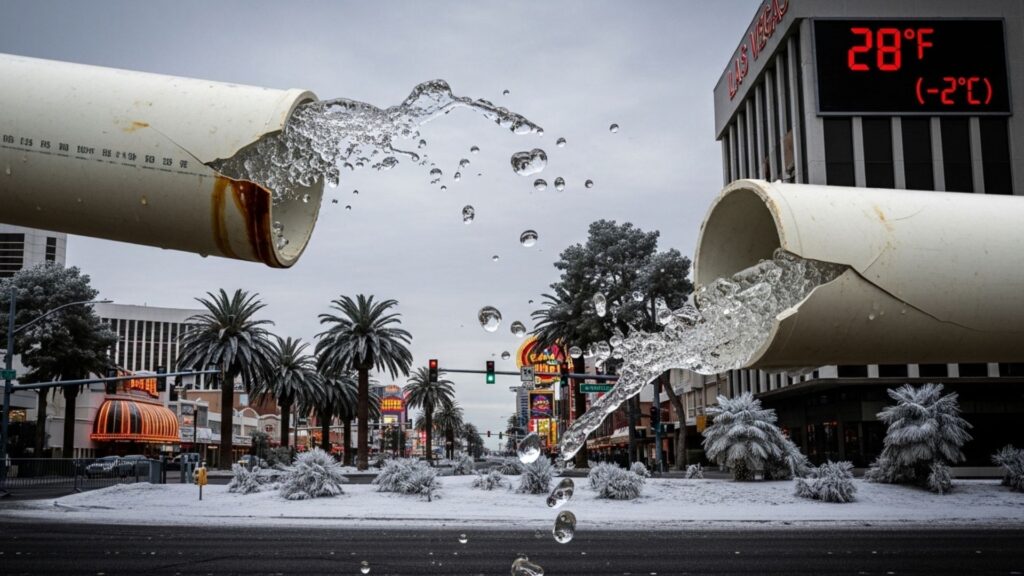
In winter, during the day, it’s 10-15 degrees, which is normal. But at night, the temperature drops sharply to zero or below. Pipes react: they expand, contract, and expand again. Connections loosen, and microcracks begin to leak water. In older homes from the 80s and 90s, the pipes are already at their limit. Add the lack of proper insulation and exposed outdoor pipes, and you have the perfect conditions for winter leaks. Houses in cold states are designed with frost in mind: pipes are buried deeper and thoroughly insulated. But frozen pipes in Las Vegas take people by surprise because they are not used to the cold here.
Hidden Causes Behind Cold-Weather Pipe Damage
When it comes to hidden causes, it is usually a combination of several factors:
- Poor insulation – pipes in the garage, attic, and exterior walls are practically bare.
- Outdoor hose faucets – the hose wasn’t disconnected; the water froze, and that was it.
- Pipes in the crawl space – no heating or insulation.
- Changes in ground temperature stress pipes in the foundation slab, and this stress increases in winter.
All of these are common winter plumbing problems in Vegas. Water freezes, expands, and if the pipe has nowhere to “breathe,” it bursts. This is what pipes bursting in cold weather looks like: not an explosion, but a quiet crack that ends up costing thousands.
Warning Signs of Water Leak Issues in Winter
Winter leaks rarely announce themselves with a puddle. More often, they give hints:
- The water pressure fluctuates for no reason
- Stains and streaks appear on the ceiling or walls
- Your water bill has jumped, even though you usually use less in winter
- You can hear dripping or a quiet sound of water behind the wall
If two or three of these signs coincide, you need professional water leak detection, because unthinking searches can mean breaking walls at random.
The Risk of Frozen Pipes in Las Vegas
Yes, pipes freeze in Vegas. One night below -2 is enough for water in an unprotected pipe to turn to ice. Frozen pipes in Las Vegas are not a myth. Pipes in the attic, outdoor faucets, and pipes in an unheated garage are especially at risk. The worst part is that the pipe may not burst right away. It cracks, then thaws, and water begins to seep inside the wall. You won’t find out until a week later, when your wallpaper starts to peel.
How to Protect Pipes Before Temperatures Drop
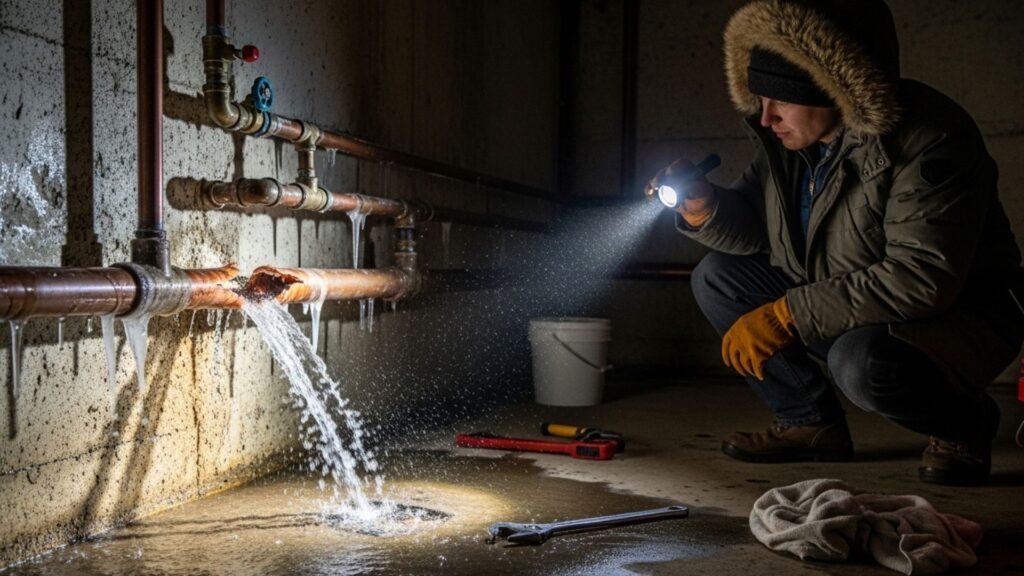
Here are some cold-weather plumbing tips that really work:
- Insulate exposed pipes (especially in the garage, attic, and outside). Foam tubes from the store cost pennies.
- Seal any gaps around pipes where cold air can enter the house.
- Disconnect garden hoses and drain water from outdoor faucets.
- When frost is forecast, leave the faucets slightly open. Moving water freezes less easily.
These are basic winter plumbing tips. Understanding how to protect pipes in cold weather is not about technology, but about simple things done promptly.
The Role of Professional Water Leak Detection Services
Sometimes leaks start where you can’t see them: inside a wall, under a stove, in a sewer line. Professional water leak detection uses thermal imaging cameras, acoustic sensors, and internal pipe inspection cameras. A seasonal check before winter is like a car inspection: they may not find anything, but if they do, you’ll save a lot of money.
What to Do If Pipes Burst During a Cold Snap
If it happens, act quickly. Turn off the main water valve. If water has gotten onto electrical wiring, turn off the electricity. Call a specialist – not tomorrow, but now. There is a 24/7 emergency service for situations like this. One of the main winter plumbing tips is not to wait. The difference between “called in an hour” and “called in a day” is minor repairs versus major repairs.
Seasonal Maintenance Checklist for Las Vegas Homeowners
A short list for every November:
- Check the insulation on pipes in the attic, garage, and outside
- Make sure the shut-off valve is working
- Schedule a plumbing inspection before the cold weather sets in
- Keep an eye on the forecast – when frost is predicted, take action in advance
Simple prevention is the best protection against winter leaks. Five minutes in the fall saves five thousand in the winter.
FAQ – Winter Plumbing Issues in Las Vegas
What temperature causes pipes to freeze in Las Vegas?
The risk begins below -2°C (28°F). For unprotected pipes, even 0°C can be enough if the cold lasts several hours.
Are winter leaks common in desert climates?
More often than you might think. Homes are not designed for cold weather, pipes are poorly insulated, and nighttime temperature fluctuations create conditions for damage.
How can I detect a hidden water leak in winter?
Keep an eye on your bills, water pressure, and the condition of your walls. For accurate detection, you will need a thermal imaging camera.
When should I call a plumber?
As soon as you notice wet spots, a drop in pressure, an increase in your bill, or the sound of water behind the wall, call us. At Leak Experts USA, we work 24/7 and will come out the same day.