You walk into a room, and there’s water on the floor. Or the ceiling is dripping. Your first reaction is panic – but what you do in the next few hours is what really matters.
Water leak damage moves fast. It gets into walls, soaks into the ground, and spreads to places you can’t even see. The first 24 to 48 hours decide how bad this gets. Move quickly, and you can keep it manageable. Wait around, and you’re dealing with rot, mold, and a bill that’s a lot harder to swallow.
Stop the Source Before Addressing the Damage
First thing: turn off the water. Everything else waits. You can’t mop up or dry anything out while water is still coming in – you’re just falling further behind. If you can see where it’s coming from (a pipe under the sink or a toilet supply line), turn the shutoff valve for that fixture clockwise until it stops. If you can’t find the source, go straight to the main shutoff valve and cut the water to the whole house.
If it seems like water is coming from inside a wall or under the floor, don’t start poking around – call a plumber. That kind of situation can turn into full plumbing leak damage very quickly.
Immediate Steps in the First 24 Hours
Water’s off. Now work through this list quickly – every step reduces plumbing-leak damage and keeps repair costs down.
- Electricity first. If water got anywhere near outlets, light switches, or appliances, cut the power to that area at the breaker. Don’t touch anything electrical until you do.
- Get your stuff out. Move furniture, electronics, rugs – anything you can – to a dry room. Put foil or small pieces of wood under the legs of heavy furniture so they don’t stain the wet floor.
- Get the water out. Use towels, a wet/dry vac, or a pump if there’s a lot of water. The faster it’s gone, the less it soaks into the floor and walls.
- Get air moving. Open windows, run fans, use the AC – anything that moves air speeds up drying.
- Pull up what’s soaked. The wet carpet needs to come up. If the walls near the floor feel damp, pull the baseboards off – this lets the drywall dry out from both sides instead of staying wet inside.
Before you start moving things, take photos and videos of everything. Your insurance company will ask for it.
How to Recognize Early Signs of Water Damage You Might Miss
Not every leak leaves a puddle you can step in. A lot of the time, the early signs of water damage are quiet – and by the time they’re obvious, the problem is already bigger than it had to be.
Watch for: paint bubbling or peeling off a wall. Drywall that feels soft or spongy. A brownish-yellow ceiling stain that slowly grows. A musty smell that appeared out of nowhere. Condensation on windows that were dry before.
All of these are water damage signs that something is wet somewhere nearby. Water doesn’t stay where it lands – it travels along pipes and joists. The early signs of water damage on the surface usually indicate the wet zone extends farther than it appears.
Hidden Damage Behind Walls and Under Floors
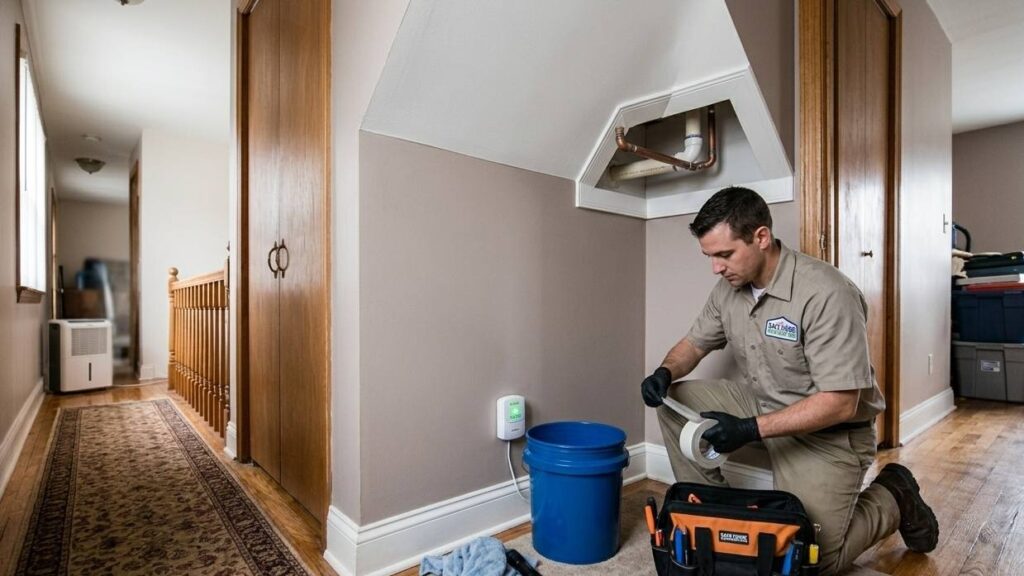
What you can see is rarely the full picture. With any water damage leak, moisture gets trapped inside walls, soaks into insulation, and weakens the wooden frame. Mold can start growing in those hidden spots within 48 hours.
Under the floor, moisture between the subfloor and surface makes hardwood buckle and laminate lift – while everything looks fine on top.
This is why plumbers use moisture meters and thermal imaging cameras. If you’re noticing signs of water leaking but can’t find where it’s coming from, that’s the equipment that finds it.
When Mold Becomes a Risk After a Leak
Mold can start growing within 24 to 48 hours – especially on drywall, wood, and insulation. If the wet area wasn’t fully dried in the first day or two, get a mold inspection before closing any walls back up. Look for black, green, or white fuzzy spots. But also pay attention to the invisible signs of water leaking – a damp smell that won’t go away, or people in the house suddenly having allergy symptoms they didn’t have before.
Even if the water leak damage looks dry from the outside, mold can be growing inside the wall. If the affected area is bigger than about 10 square feet, call a professional remediation team. That’s not something to DIY.
Filing an Insurance Claim for Leak Damage
Most home insurance policies cover sudden plumbing failures. What they won’t cover is a slow leak that was ignored for months – insurers call that a maintenance problem.
To make your leak damage repair claim go smoothly:
- Call your insurance company within 24 hours
- Send them the photos and videos you took right away
- Get a written estimate from a restoration company
- Don’t throw away damaged items until an adjuster has looked at them
- Save receipts for anything you spent responding to the emergency – fans, wet vacs, a hotel if you had to leave
A leak damage claim is stronger when you can show you acted immediately.
Professional Water Damage Restoration: What the Process Looks Like
For anything more than a small contained spill, bring in professionals. It’s worth it.
A restoration crew maps where the moisture went, pumps out remaining water, then runs commercial dehumidifiers and air movers for three to five days while applying mold-prevention treatments. Once moisture levels are back to normal, water leak damage repair moves into reconstruction.
The reason water-damage leak repairs sometimes fail isn’t that they weren’t fixed – it’s that they weren’t dried properly first. Trapped moisture can lead to rot or mold months later.
Repairing the Damage: What Gets Replaced and What Can Be Saved
A big part of leak damage repair is knowing what to save and what to throw out.
- Drywall soaked more than a few inches needs to come out – it won’t dry and becomes a mold risk.
- Hardwood floors caught early can be dried and sanded; buckling means replacement.
- Carpets can sometimes be cleaned, but the padding underneath almost always needs to go.
- Solid wood cabinets can usually be saved; particleboard swells and is usually a total loss.
- Insulation that gets wet needs to come out – it loses its effectiveness and can hold mold.
Always check for water-damage signs before sealing walls back up – trapped moisture becomes a much bigger problem later.
How to Prevent Future Water Leak Damage
The best water leak damage situation is the one that never happens. A few simple habits make a real difference.
Check the plumbing under sinks and behind toilets once a year – look for drips or rust. Swap out old rubber washing machine hoses for braided stainless steel hoses. Consider a whole-home leak detector that automatically shuts off the main valve if a leak occurs.
Watch your water bill – an unexplained jump is one of the most common water damage signs that something is leaking out of sight. If your house is over 20 years old, a plumbing inspection before something goes wrong is a smart move.
Conclusion
A water damage leak is a race against the clock. The faster you stop the water and start drying, the less damage you’ll have to deal with. Every hour gives moisture more time to travel.Don’t brush off signs of water leaking – a soft spot in the wall, a ceiling stain, a smell that wasn’t there before. Those are the warnings that come before the expensive problems.