Spring is the right time for a full walk-through of your home’s plumbing. Las Vegas has its own set of conditions that make this worth doing every year. The temperature swings between cold nights and warm days put stress on pipe joints and seals. Months of dry weather mask slow leaks that have been building since fall. And once the heat kicks in, water usage jumps – irrigation systems, pool maintenance, evaporative coolers all running at once.
A spring plumbing checklist done now catches small problems before they become expensive ones. Here’s how to go through the whole house.
Check Every Faucet for Drips and Slow Leaks
Start with every faucet in the house – kitchen, bathrooms, utility sink, wet bar. Turn each one on and off, then wait a moment to see if the faucet drips appear after the handle is closed. Check the base of the faucet for moisture or white mineral crust. Las Vegas hard water is rough on rubber washers and cartridges, accelerating their failure.
Get under the sinks with a flashlight. Look at the supply line connections for dampness, green corrosion, or water stains on the cabinet floor. These are early signs of a leak that hasn’t yet become obvious. Good plumbing spring tips start here – faucet drips caught early cost a few dollars to fix. Left alone, they corrode the whole fixture.
Test Every Toilet for Leaks and Proper Function
Toilets are behind more hidden water waste than most people realize. To check for toilet leaks, try the food coloring test. Add a few drops of dark dye to the tank and wait 15 minutes without flushing. If the color shows up in the bowl, the flapper is leaking and needs to be replaced.
Also listen for phantom flushing – when the toilet starts refilling on its own, even when not in use. Make sure all toilets flush completely and that the water level in the tank returns to the right height. Then look at the floor around the base. Discoloration or moisture there means the wax ring seal may be going. The mineral content in Las Vegas water wears through these internal parts faster than the national average, so toilet leaks here tend to show up sooner than most homeowners expect.
Inspect Your Water Heater Before Demand Increases
The water heater tank works hard year-round, but spring is a good time to check it before summer demand picks up. Walk around the unit and look for rust, moisture, or mineral deposits. Test the temperature-pressure relief valve by lifting the lever briefly – water should flow and stop cleanly when you release it.
Check the pipe connections at the top for green or white corrosion. In Las Vegas, scale builds up inside the tank, lowers efficiency, and eventually causes the metal to rust through. Catching this during spring plumbing leak detection can extend the unit’s life and keep energy bills from creeping up without explanation.
Inspect Outdoor Hoses, Spigots, and Irrigation Lines
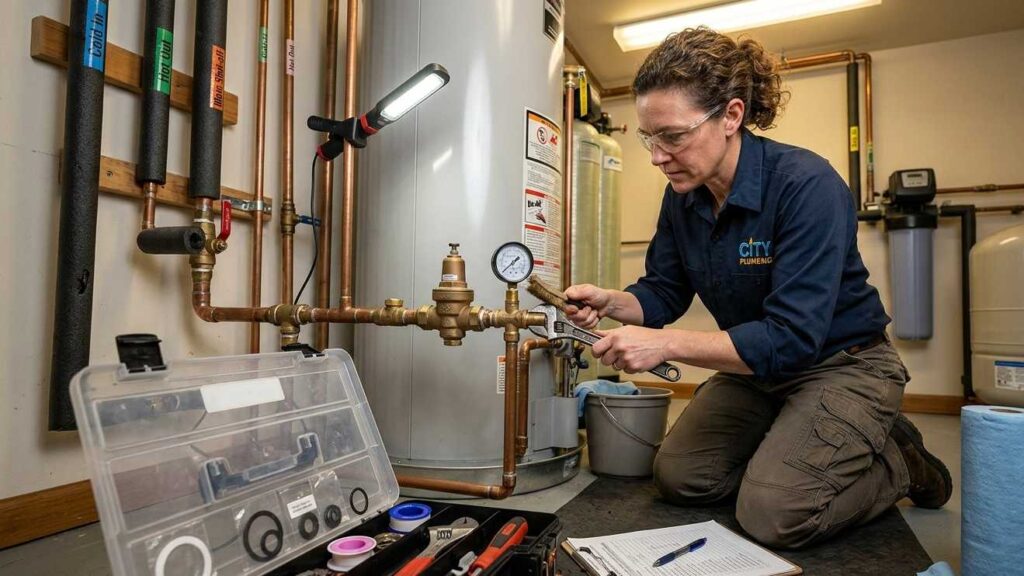
Outdoor plumbing takes a beating from the sun and heat. Disconnect all outdoor hoses and check each spigot for drips. Turn the valves on and off to make sure they seal properly. Inspect the hoses themselves for cracks or bulges from UV exposure – those can burst under pressure.
Run the irrigation system zone by zone and walk the yard while it’s running. Look for broken sprinkler heads, pooling water, or patches of grass that are wetter than the rest. Those points point to a cracked underground line. Also, check the backflow preventer for visible leaks.
Outdoor hoses and irrigation are usually behind the biggest springtime bill spikes. A single broken underground drip line can run for weeks before anyone notices.
Check Your Sump Pump If You Have One
Not every Las Vegas home has a sump pump, but houses near desert washes or with below-grade rooms often do. To test it, pour a large bucket of water into the pump pit. The float should rise, the pump should kick on, and the water should drain quickly before the unit shuts itself off. Make sure the discharge line is clear and that it’s carrying water far enough from the foundation.
Examine Plumbing Vent Pipes on the Roof
Plumbing vent pipes stick up through the roof and are sealed with rubber boots or metal flashing. In the Las Vegas sun, those rubber seals crack and crumble faster than in most climates. When they go, rainwater can get in through the roof and run down inside the walls.
You can often spot a cracked boot from the ground with binoculars – you don’t have to get on the roof to check. If you do go up, look for debris blocking the pipe opening as well. A blocked vent can cause gurgling drains and create pressure problems that contribute to toilet leaks inside the house.
Look for Signs of Hidden Leaks Throughout the House
After checking the specific fixtures, do a general walk-through for anything that looks off. Spring plumbing leak detection isn’t just about the obvious spots – look at walls and ceilings for new water stains, bubbling paint, or soft patches. Check baseboards for warping or gaps pulling away from the wall.
Open every cabinet under a sink and feel the wood for dampness. Walk across tile or laminate floors barefoot – warm or spongy spots are classic slab-leak signs. And check the water meter when nothing in the house is running. If the dial is moving, there’s a leak somewhere. That one check is worth doing on its own as part of your annual spring plumbing leak detection routine.
Spring Maintenance Tasks That Prevent Future Leaks
A few tasks that go beyond just checking for leaks:
Flush the water heater tank to remove mineral buildup at the bottom. Clean the aerators on faucets to restore flow. If your washing machine still uses rubber hoses, swap them for braided stainless steel – rubber hoses typically last 5 years, and failures are sudden.
Check your home’s water pressure with a basic gauge. In Las Vegas, it should sit between 40 and 80 psi. Above that, every pipe joint and seal in the house is under more stress than it should be. High pressure is one of the less visible plumbing tips for spring that actually prevents many failures down the line.
These are the kind of plumbing tips for spring that take 20 minutes but add years to how long your plumbing lasts. Following plumbing spring tips like these each year makes the difference between reactive repairs and just staying ahead of things.
Conclusion
Going through this spring plumbing checklist takes about an hour. Most of it doesn’t need any special tools or experience. But it can save thousands in repairs and water waste over a Las Vegas summer. Catch a drip, a running toilet, or a cracked irrigation line now, and you won’t be dealing with it when it’s 110 degrees outside and everything is running at full capacity.Bookmark this spring plumbing checklist and go through it every year. And if you find something that needs a pro, Leak Experts USA is available 24/7.