Slow drains. Bad smells. A wet spot in the yard that won’t go away. These signs can point to two very different problems. Sewer leak detection issues and a stubborn sewer clog can look almost identical from the outside. But they’re not the same thing at all. A clog is a blockage inside the pipe. A leak means the pipe itself is broken. One needs clearing, the other needs repair – treating them the same wastes money and leaves the real problem behind.
What Is a Sewer Line Leak?
A sewer line leak happens when a pipe that carries wastewater away from your home develops a crack, a break, or a joint that pulls apart. When that happens, sewage starts escaping into the surrounding soil – and that’s a serious problem.
The damage adds up fast: soil contamination, foundation erosion, and pests drawn in by the moisture. Common causes include aging pipe materials like clay or cast iron, tree root intrusion, and ground shifting.
A sewer pipe leak is a structural failure. It won’t get better on its own. Left long enough, it leads to a full pipe collapse – and the repair bill that comes with it.
What Is a Sewer Clog?
A sewer clog is a blockage that builds up inside the pipe, preventing wastewater from flowing out of your home. The pipe itself may be completely intact – the problem is what’s accumulated inside it.
Grease, hair, soap residue, and “flushable” wipes (which don’t actually break down) are the most common culprits. Clogs can be partial – slowing drainage to a trickle – or complete, causing a full backup through your lowest fixtures.
The main sewer line clog cost is usually much lower than a structural repair. Recurring clogs often point to something deeper – a sagging section of pipe that keeps catching debris no matter how many times it gets cleared.
Warning Signs That Point to a Sewer Leak
Some signs point specifically toward a leak in the sewer line rather than a blockage.
A sewage smell in your yard or basement – even when drains seem fine – is a major red flag. Soggy grass patches, or a lawn section noticeably greener than everything around it, are also signs. That’s a sewer line leak acting like underground fertilizer.
More serious signs include sinkholes forming near your foundation or cracks appearing in interior walls. This means the leaking water has been eroding the soil under your home long enough to start affecting the structure. At that point, the problem needs professional attention right away.
Warning Signs That Point to a Sewer Clog
A sewer clog usually announces itself through your fixtures rather than your yard.
The clearest sign is multiple drains backing up at the same time – your shower fills when you flush the toilet, or your sink gurgles when the washing machine drains. Gurgling pipes, water backing up in the lowest fixtures first, or a toilet water level that rises and falls unpredictably all point toward a main line blockage.
One slow drain usually means a local problem. Several drains acting up at once points to the main line – and that’s when you need sewer line clog repair before things back up completely.
Symptoms That Can Mean Either Problem
Foul odors near your drains and slow drainage can be signs of both a sewer pipe leak and a serious blockage. They’re not exclusive to one problem.
To make it trickier, a clog can actually hide a leak. Debris gets trapped behind a partially collapsed section of pipe, creating a blockage while that same section leaks into the surrounding soil. You get the clog cleared and assume everything is fixed – but the structural damage is still there beneath the surface.
Symptoms alone can’t give you a real answer. A camera inspection is the only way to know for sure.
How Professionals Diagnose the Problem
To get a real answer, plumbers use sewer leak detection equipment – most commonly a waterproof video camera fed through the line. The footage shows exactly what’s inside: cracks, root intrusion, collapse, or a blockage.
For sewer leak testing, hydrostatic pressure testing is another option: fill the line with water and watch if the level drops. Smoke testing pumps non-toxic smoke into the pipes – if it rises from your yard or through floor cracks, it marks the exact breach point.
Sewer leak detection via camera inspection is the fastest and most reliable way to get a clear diagnosis – and it ensures the right repair is done the first time.
Sewer Leak Repair: What to Expect
Once a sewer line leak is confirmed, the repair approach depends on the extent of the damage. A spot repair digs up and replaces just the broken section – the right call when damage is isolated. For more widespread issues, trenchless sewer pipe leak repair is usually better: a cured-in-place liner is inserted into the existing pipe and hardened in place, creating a new pipe inside the old one without digging up your yard. If the pipe is too far gone for lining, pipe bursting pulls a new pipe through as the old one breaks apart.
Sewer Clog Repair: What to Expect
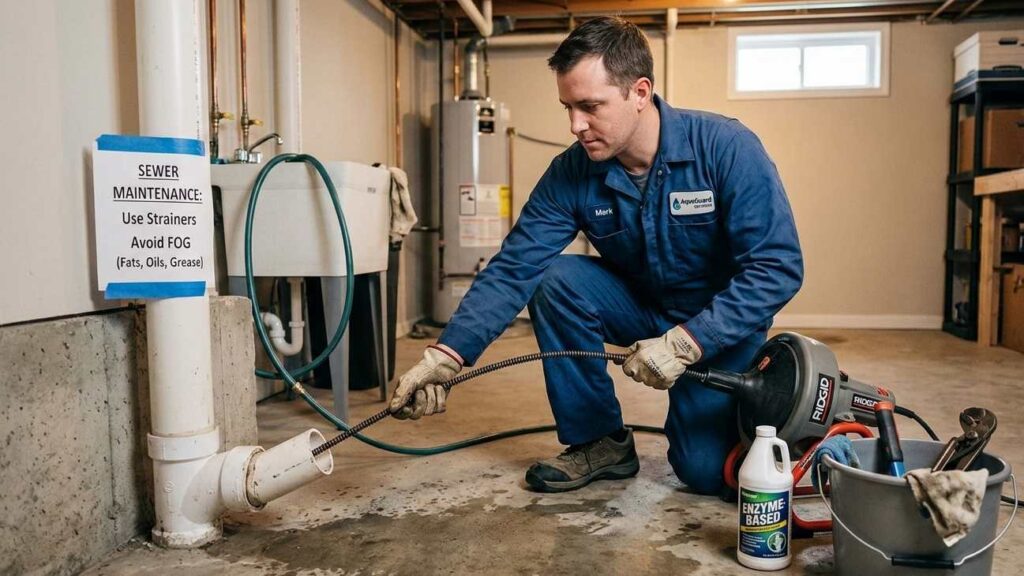
When the problem is a blockage, the work shifts to drain clog removal. Mechanical snaking uses a rotating cable to break through hair, paper, and soft buildup. For a more thorough job – heavy grease, mineral scale, or roots – hydro jetting is the better choice. High-pressure water blasts the pipe walls clean and is one of the most effective methods for sewer line clog repair, restoring the pipe to near its original condition.
If tree roots caused the clog, a chemical inhibitor can be applied after cleaning to slow regrowth. Hydro jetting can also reveal pipe damage hidden behind the buildup, in which case, drain clog removal leads straight into a repair.
Cost Comparison: Sewer Leak Repair vs. Clog Clearing
Standard clog clearing typically runs $150-$500. Hydro jetting costs $350-$900 but yields a much more complete result. Either way, the main sewer line clog cost is manageable for most homeowners.
Repairs are a bigger number. Spot sewer pipe leak repair runs $1,000-$4,000, depending on depth and access. Full trenchless lining for the whole line can reach $4,000-$10,000. The upside is that a properly done repair solves the problem instead of delaying it – and ignoring a leak always costs more in the long run.
How to Prevent Sewer Leaks and Clogs
For leak prevention, a camera inspection every few years can catch a leak in the sewer line before it gets expensive. Addressing tree root issues early is far cheaper than waiting until they break through the pipe wall.
For sewer clog prevention: no grease, no “flushable” wipes, nothing that isn’t waste or toilet paper. Sewer leak detection as part of an annual maintenance plan covers both fronts.
Conclusion
A sewer line leak and a sewer clog can look the same from the surface – slow drains, bad smells, wet patches in the yard. But they’re completely different problems that need completely different fixes. Leaks are structural failures that damage your soil, foundation, and property. Clogs need clearing – sometimes with a bigger repair hiding behind them.
The only way to know for sure is a camera inspection. Slow drains and strange smells are your early warning – don’t wait to act on them.