You open the bill, look at the number, and something’s off. Last month was normal. This month it’s doubled. Nothing changed – or so you think. That kind of sudden water bill increase almost always has a cause, and finding it usually doesn’t take long once you know where to look.
Some reasons are simple. Others point to a hidden leak that’s been running 24 hours a day without you knowing. This guide goes through every common cause – starting with the things you can check in five minutes, working up to the stuff that needs a pro.
Rule Out Simple Explanations First
Before you start pulling up floors, check the obvious stuff. In Nevada, a Las Vegas water bill increase often comes down to the season. Summer irrigation runs longer. Filling or topping off a pool uses thousands of gallons. A houseguest staying for two weeks, extra loads of laundry, a kid home from school – all of it pushes usage up.
Also worth knowing: the Las Vegas Valley Water District uses tiered rates. Go over a certain threshold, and your price per gallon jumps. A water bill increase can also just be a longer billing cycle than usual. Pull up your last few bills and compare the actual gallons used, not just the dollar amount.
The Most Common High Water Bill Causes
Once the seasonal stuff is ruled out, the problem is almost always a leak. The most common high water bill causes are quiet ones – water escaping somewhere in the system around the clock. Pipes run under pressure, so even a pinhole drips constantly. The goal is to narrow down where.
Running Toilets
A toilet that runs without stopping is one of the most common high water bill reasons, and most people don’t even know it’s happening. A worn flapper or a bad fill valve can waste 200 gallons a day. You often can’t hear it from the next room.
Test it this way: drop food coloring into the tank and don’t flush for 15 minutes. If the color shows up in the bowl, your flapper is leaking. Fixing a running toilet water bill problem usually costs under $10 in parts and takes about half an hour. It’s almost always the first place worth checking.
Dripping Faucets and Showerheads
A single faucet dripping once per second adds up to more than 3,000 gallons a year – enough to cause a sudden water bill increase on its own. Go through every faucet, showerhead, and outdoor spigot in the house, including the ones in rooms you don’t use much. The fix is usually a rubber washer or ceramic cartridge, both cheap and easy to find.
Leaking Irrigation Systems and Outdoor Plumbing
A cracked irrigation pipe or broken drip line buried under soil or rocks can run for months before anyone notices. In Las Vegas, this is one of the most common sources of a Las Vegas water bill increase – and a sudden spike in water bill often traces back to a sprinkler head that snapped off or an underground valve that won’t close fully.
Run each irrigation zone manually and look for pooling water or patches of grass that are greener than the rest. And check your pool’s auto-fill valve. If the float gets stuck open, it’ll keep running water into the pool whether it’s needed or not.
Water Heater and Appliance Leaks
Washing machines, dishwashers, water heaters, ice makers – all of them have connections that wear out. A pressure relief valve on the water heater that drips steadily will result in a high water bill by the end of the month. Check the floor and walls around each appliance for moisture, rust stains, or mineral deposits. A small seep at a hose fitting doesn’t look like much, but it adds up.
When Your Water Bill Is High But You See No Visible Leak
A high water bill with no visible leak anywhere inside the house usually means the problem is underground or inside the walls. High-water-bill, no-visible-leak situations are the trickiest – the water is draining into the soil or under the slab, so there’s nothing to see. The most common culprits are slab leaks (a pipe under your concrete foundation) or a break in the service line that runs from the city meter to your house. Because there’s a high water bill, no leaks you can find, this one needs professional equipment.
How to Check Your Water Meter for a Hidden Leak
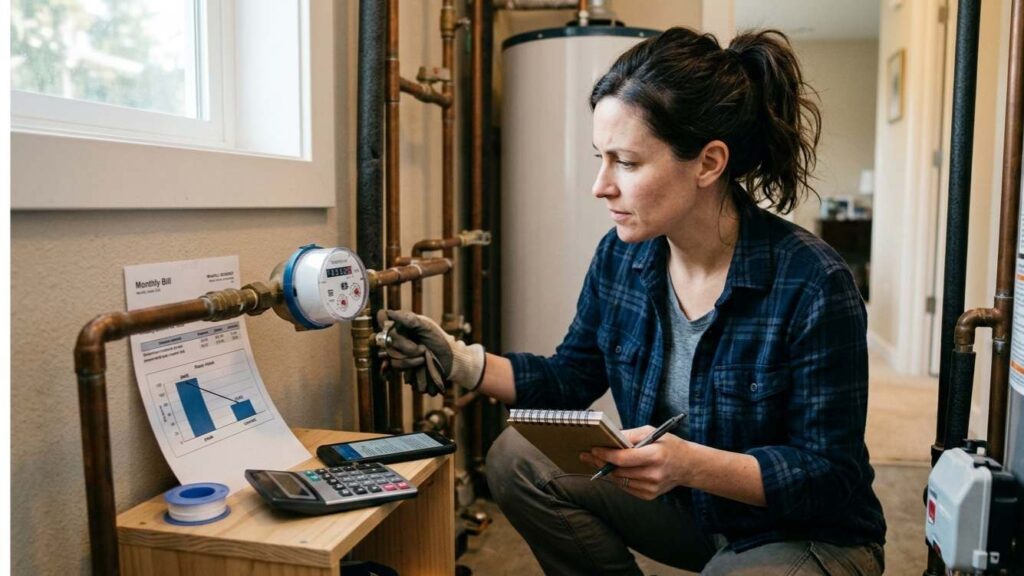
Your water meter can confirm whether something is leaking even if you can’t find it. Turn off every faucet, appliance, and irrigation zone in the house. Go out to the meter box near the street and look at the flow indicator – a small triangle, dial, or digital display depending on the model. If it’s moving while everything’s off, water is going somewhere.
For more certainty: read the meter, don’t use any water for two hours, then read it again. If the number changed, you leak. A water bill suddenly high with a moving meter is a clear sign something needs attention – this is how you confirm it without guessing.
What to Do If the Meter Test Confirms a Leak
A sudden increase in the water bill, confirmed by a meter test, means it’s time to call someone. A licensed plumber with leak-detection equipment – acoustic sensors and thermal imaging – can find the break without opening walls unnecessarily. Keep photos and all receipts. A sudden increase in the water bill due to a hidden pipe failure can sometimes qualify for a credit from the water district once the repair is documented.
Can You Get a Refund or Adjustment on a High Water Bill?
Most people don’t get cash back, but utilities do have adjustment programs. A water bill refund or credit is possible if you can show that the high water bill was caused by a legitimate hidden leak repaired by a licensed plumber, and you’ve submitted the invoice. The water district may credit part of the overage – it’s worth asking once the repair is done.
How to Prevent Future Sudden Increases in Your Water Bill
Preventing a sudden spike in water bill is mostly about not ignoring small things:
- Do the toilet dye test every six months
- Check appliance hose connections once a year
- Walk your irrigation lines each spring to catch winter damage
- Keep an eye on your monthly usage – slow creep over several months is one of the subtler high water bill reasons
- Look into a smart water monitor if you travel or have a big property
Homes older than 20 years are worth getting inspected periodically. Pipes don’t last forever.
Conclusion
A suddenly high water bill means something changed, and it won’t fix itself. Start with the toilet, the faucets, and the irrigation. If nothing turns up, use the meter test. If the meter’s moving with everything off, you’ve got a hidden leak – and a sudden water bill increase is just the beginning of what it’ll cost if you wait.