When it comes to your home’s plumbing system, one question many homeowners rarely think about–until there’s a problem–is how deep are sewer lines buried. When waste in the underground pipes are getting moved out of your house, you really are not aware of this; but when something goes wrong it is the depth of these sewer lines that makes a great deal of difference in repairs, replacement, landscape projects, and even new construction.
We have been engaged by hundreds of homeowners at Leak Experts USA who have sewer line issues particularly those who are residing in areas where the soil moves, the plumbing in the area is old fashioned and the temperature is stiff. You need the sewer pipes depth to make better decisions, and avoid costly mistakes, whether you are planning a home remodeling, or just noticing the symptoms of a sewer issue.
This blog disperses all the knowledge you need to know such as the depth requirements of sewer lines, the depth requirements of your sewer lines, prevailing standards in installation, and when to seek the help of a professional.
Have questions now? Call Leak Experts USA (702) 745-5571 to inspect sewer line and provide expert advice on that line the same day.
Table of Contents
- Why Sewer Line Depth Matters
- How Deep Are Sewer Lines Buried?
- Factors That Influence Sewer Line Depth
- Understanding Sewer Line Depth Requirements
- Standard Sewer Pipe Burial Depth for Homes
- How Sewer Line Depth Affects Installation and Maintenance
- Residential Sewer Line Depth in Different Climates
- Signs Your Sewer Line May Be Too Shallow or Improperly Installed
- Modern Tools and Techniques for Measuring Sewer Line Depth
- Preventing Sewer Line Problems Through Proper Burial and Maintenance
- How Deep Should Replacement Sewer Lines Be?
- FAQs About Sewer Line Depth
Why Sewer Line Depth Matters
Sewer lines are not seen by most of the homeowners, and hopefully, they never have to. But it depends on how deep the sewer pipes go and that is a big factor in:
- Preventing sewer backups
- Coating the pipes to prevent damages.
- Maintaining the movement of wastewater.
- Preventing problems of soil mobility.
- Make sure that the plumbing codes are adhered to locally.
- Minimizing the possibility of expensive repairs in the future.
If you ever plan major landscaping, adding a pool, building an addition, or planting deep-rooted trees, knowing how deep are sewer lines buried can help you avoid accidentally damaging them.
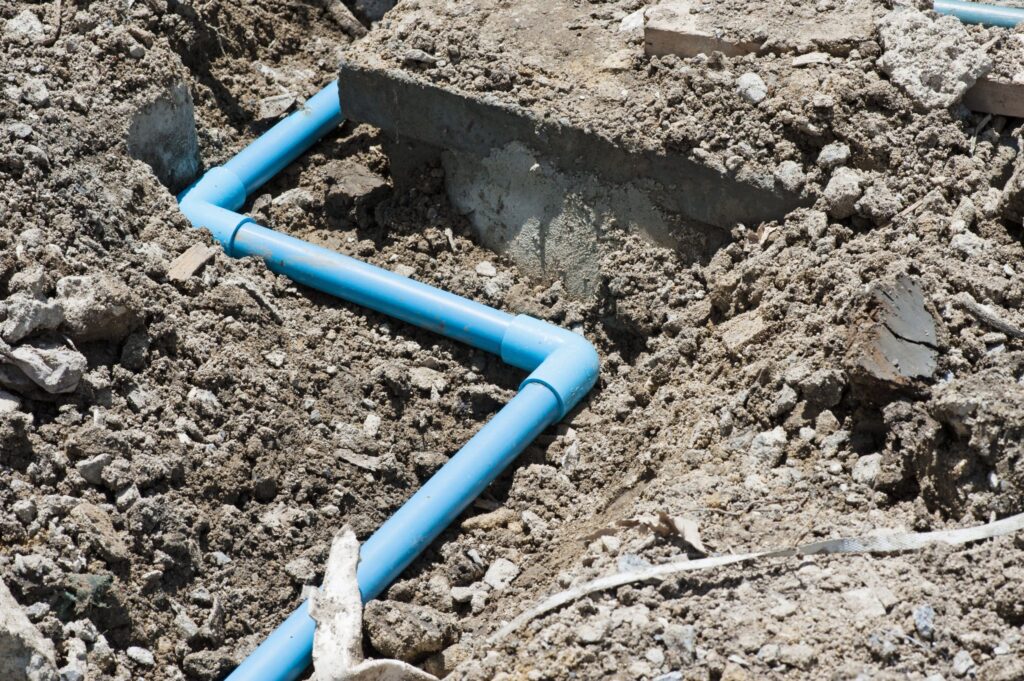
Sewer line depth is all the more crucial to homeowners living in neighborhoods whose infrastructures are older or the houses constructed pre-modern plumbing requirements.
How Deep Are Sewer Lines Buried?
Let’s get right to the point.
The majority of residential sewer lines are covered 18 to 6 feet deep.
This is however, just a general range. The depth differs greatly owing to the fact that it is determined by soil conditions, climatic conditions and local building codes.
The sewer lines are usually located at:
- 18-24 inches in warm climates
- In colder climates (where there is frost), 3-6 feet.
- 4 feet or more where local sewer lines are located below the street.
During our field practice, it is the common case of the homeowner, who will be of the belief that sewer pipes are a few feet underground- yet that is not always the case. The truth is that shallow sewer pipes are not an exception as considered by many, particularly in newer developments.
That is why it is necessary to know the standard sewer pipe burial depth and the laws of your region.
Factors That Influence Sewer Line Depth
The question how deep are sewer lines buried cannot be answered with a single number because several variables impact depth. These include:
Local Building Codes
Plumbers are governed by the set guidelines of the sewer lines installation set up in the cities. These are the guidelines and minimum depths established to:
- Prevent freezing
- Inhibit automobile loading of pipes.
- Have adequate flow and drainage.
Frost Line Depth: Sewer lines that are to be installed in cold climates have to be covered with the frost line to avoid bursting by freezing.
Soil Type and Stability: Some soils, like clay, sands, or swelling soils, are to be buried deeper so as not to move, compress, or the roots not to penetrate.
Slope Requirements: The line of sewers is dependent on gravity, and, therefore, should have a downward gradient of no less than 1/4 inch to the foot.
This inclination by itself has the capacity to determine the depth the pipe has to begin and end.
Local Sewer Main Depth: The sewer line of your home should be linked to the city main which can be deeper based on the grade of the roads and the age of infrastructure.
Home Elevation: Masonry houses constructed in slopes and hills will have an inherent tendency to have deeper sewer lines to allow a proper flow.
All this is what adds up to make your residential sewer line depth and there are not a pair of homes which are identical.
Understanding Sewer Line Depth Requirements
In terms of the depth of sewer lines, the motive here is to maintain safe, working depth of pipes and be able to comply with all regulatory codes.
Common requirements are:
- Minimal depth of burial: 12-24 inches (regional variations).
- Maximum slope: Eliminates running solids.
- Relative thickness to frost line: Essential in cold conditions.
- Coverage of soil: It should be sufficient to support pipes against pressure.
These codes are frustrating to many homeowners and they have a reason to be so. It is there that the professional guidance is needed.
In Leak Experts USA, we have a licensed plumbing team who apply cameras, depth measuring tools, and knowledge of the municipal code to make sure that all our sewer lines are installed and buried as per the code of installing sewer lines.
Standard Sewer Pipe Burial Depth for Homes
The residential sewer lines are based on a general depth guideline which is the standard sewer pipe burial depth.
In the majority of houses, this is between 18 inches to 48 inches depending on the local plumbing regulations and the soil type.
Typical Depth Standards
- Warm-weather states: 18-24 inches
- Moderate climates: 24-36 inches
- Low temperatures: 36-60 inches or more.
In addition:
- Sewer lines should tilt downwards throughout the length of it.
- The clean-outs should be mounted at convenient depths.
- The depth should not be too low to ensure that the line does not collapse or damage.
Although this is the general rules, the most effective would be a professional review.
How Sewer Line Depth Affects Installation and Maintenance
The deeper the sewer line the more complicated and costly the installation or repair.
Shallow Sewer Lines
Pros:
- Easier to access
- Reduced costs of repair and replacement.
- Faster installation
Cons:
- More vulnerable to damage
- Increased root intrusion risk.
- Increased possibility of pipe shifts.
Deep Sewer Lines
Pros:
- Improved surface pressure protection.
- Less temperature related concerns.
- More stable grave conditions.
Cons:
- More expensive to repair
- Requires deeper excavation
- Can involve heavy machinery
In case you should require repair of your sewer line, the depth of your sewer line will have a direct impact on how much it will cost, time schedule and approach.
Residential Sewer Line Depth in Different Climates
Climate is one of the greatest factors in the determination of the depth of the residential sewer line.
Cold Climate Areas
The sewer lines should also be low below the frost line that can be 3-6 feet or more depending on the area. This helps the wastewater not to be frozen in the pipe.
Warm Climate Areas
In warmer areas, in places where freezing is not an issue, sewer pipes can be buried at less depths-in some cases as low as 18 inches.
Homeowners are usually shocked upon hearing that deeper is not necessarily better; this is because of the relevance of proper slope and code compliance rather than digging to extreme depths.
Signs Your Sewer Line May Be Too Shallow or Improperly Installed
Unless your sewer line is buried at the proper depth, or not, and does not conform to the requirements of sewer line depth, you can encounter the following problems:
- Frequent sewer backups
- Slow draining fixtures
- Sewage smells outdoors
- Gurgling toilets
- Surface sinkholes
- Solubility of soil around sewer route.
- Tree root intrusion
Shallow lines are especially susceptible to moving soil, vehicle pressure, invasive root development and collapsed areas.
In case of suspicion, there is a problem and Leak Experts USA can provide a camera inspection of same-day in order to identify the depth, condition and location of the pipes.
Modern Tools and Techniques for Measuring Sewer Line Depth
Determining how deep are sewer lines buried is not something a homeowner can accurately do with a shovel and tape measure. The modern plumbers have high-tech equipment and instruments, which enable them to determine and measure underground sewer pipes accurately. Sewer camera inspection is one of the most widespread ones. It is the process of putting a tiny, waterproof camera into the pipe, which enables the plumber to view the precise depth, slope and state of your sewer line in real time.
Electronic pipe locators are another technique. Underground pipes These gadgets are able to detect metallic and plastic pipes, and determine the depth without excavations. There are even high-end equipment that are integrated with sonar and GPS mapping which produces a detailed map of your sewer line plan and depth of burial.
The professional tools are imperative as poor measurements might result in wrong repair or expensive excavation. As an example, a shallow sewer line or a sewer line that is shallow slopped is the one that may have to be replaced completely whereas a properly assessed sewer line may only need a special repair.
Our technicians at Leak Experts USA will regularly employ these new techniques in Las Vegas, in order to meet the requirements of these sewer lines depths, be it during new installation, repair, or routine maintenance. Precise technology is not only a way to protect your property, but it can also help to avoid the problems in the future, which will save your time and money.
It is time to call (702) 745-5571 and book a professional sewer line depth check.
Preventing Sewer Line Problems Through Proper Burial and Maintenance
Burial and maintenance are important in ensuring that avoidance of expensive sewer line issues. Just because your line is covered by the normal burial depths of sewer pipes does not mean that you will not have any problems in the long run. Sewer lines should be buried correctly so that the pipes are not exposed to high pressure of soil, intrusion of tree roots and other factors such as changes in temperature, which may result to a cracking of the pipes, leakages, and backups.
Preventive measures can be taken by the homeowners by ensuring that heavy machinery, vehicles or landscaping projects are not placed in the known sewer line path. Also, regular check-ups and particularly of the older lines will assist in detecting any problems before it incorporates into an emergency. The depth of residential sewer lines is not the only one, it is also necessary to keep the proper slope, to avoid the possibility of chemical or grease blockage, and proper soil compaction.
Maintenance is also important in Las Vegas where desert soil and heavy rains that occasionally occur can put a strain on buried pipes. The camera checkups, depth, and clean-outs can be done by professional plumbers to ensure that your system is running well. These minor precautionary measures cost thousands of dollars of emergency repairs.
We are the leak experts USA, which deals in sewer line repair and preventive services. Our professionals make sure that your sewer lines are installed/ maintained at the right depth, ensuring that your house is not at risk of backups, leaks and unforeseen damages. Proper burial of sewer pipes is not merely a code issue, but it can be seen as a long-term classic of peace of mind.
Today Call (702) 745-5571 to receive the professional advice and inspection.
How Deep Should Replacement Sewer Lines Be?
In case of a replacement of sewer line, the plumber must always adhere to:
- Current building codes
- Slope requirements
- Guideline on underground sewer pipes depth.
- Appropriate standards of soil compaction.
Mostly replacement lines are buried with the same depth as the original, – unless the original depth was wrong. Our team takes all possible measures to evaluate all properties accurately, to install new sewer lines at the proper depth, angle, and distance to foundations.
We also ensure that all new installations are done in accordance with the regulations of standard burial depth of sewer pipes to avoid complications in future.
FAQs About Sewer Line Depth
1. How deep are sewer lines buried?
Varies between 18 inches and 6 feet, depending on weather, code, slope and soil.
2. What are the sewer line depth requirements in most areas?
The minimum depth needed is 12-24 inches depending on the cold climate, which needs more depth.
3. Can a sewer line be too shallow?
Yes. Lines that are buried too closely to the ground may be crushed, frozen and their roots damaged.
4. Does sewer line depth affect repair cost?
Absolutely. Shallow lines are much cheaper to repair/replace. Heavy equipment and more labor are needed in deep lines.
5. How do I find out how deep my sewer line is?
The best and sure way is a camera inspection. Leak Experts USA reports depth correctly to the homeowners.
Call Leak Experts USA for Accurate, Code-Compliant Sewer Installations
Whether you’re replacing sewer lines, experiencing backups, or planning a major home project, knowing how deep are sewer lines buried helps you protect your home and avoid costly mistakes. However, the calculation of the appropriate depth is not only based on the depth measurement, but also it is important to know the slope, movements of the soil, compliance of the codes and long-term availability.
We offer:
- Sewer camera inspections
- Depth mapping
- Code-compliant installations
- Sewer repair and replacement.
- Quick service throughout Las Vegas.
- Clear pricing- no secrets.
Our licensed plumbers provide correct, safe, and long lasting remedies that ensure that your sewer system runs smoothly.
Make your sewer assessment appointment or reserve online at (702) 745-5571.
Leak Experts USA- your reliable group – your sewer line services, right.