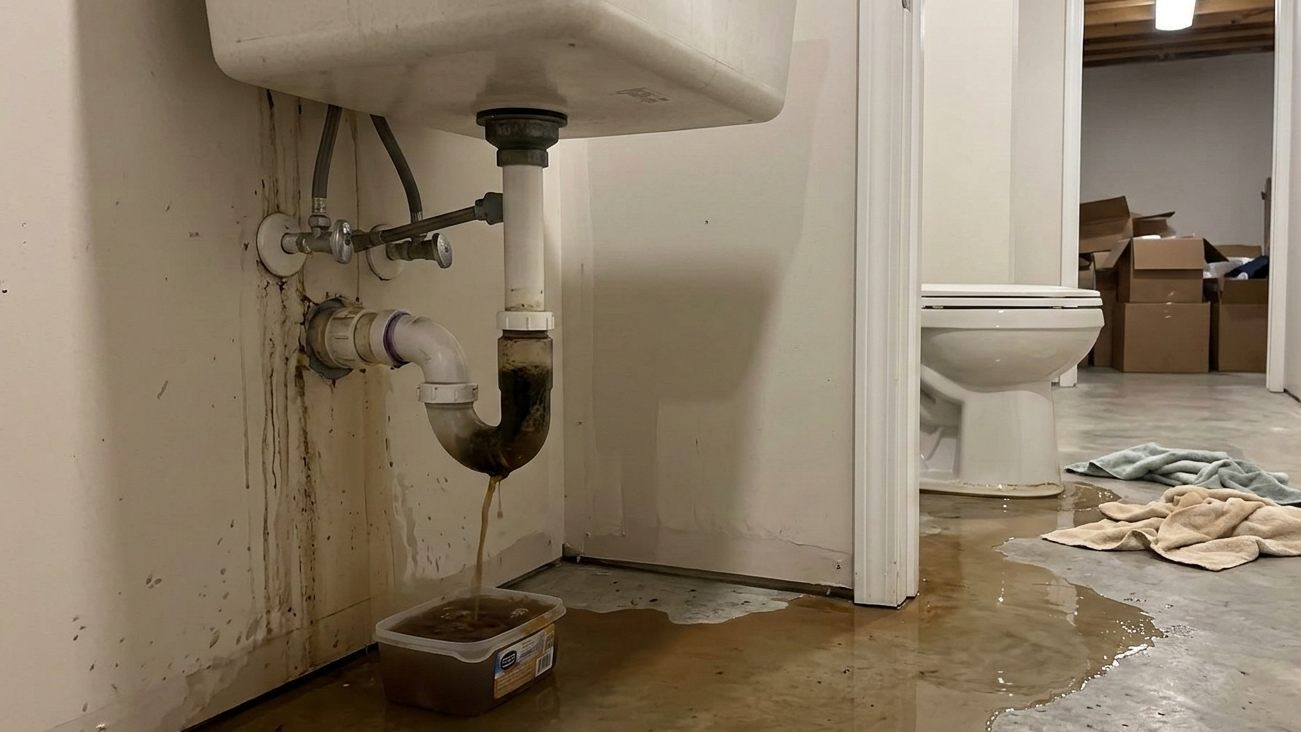
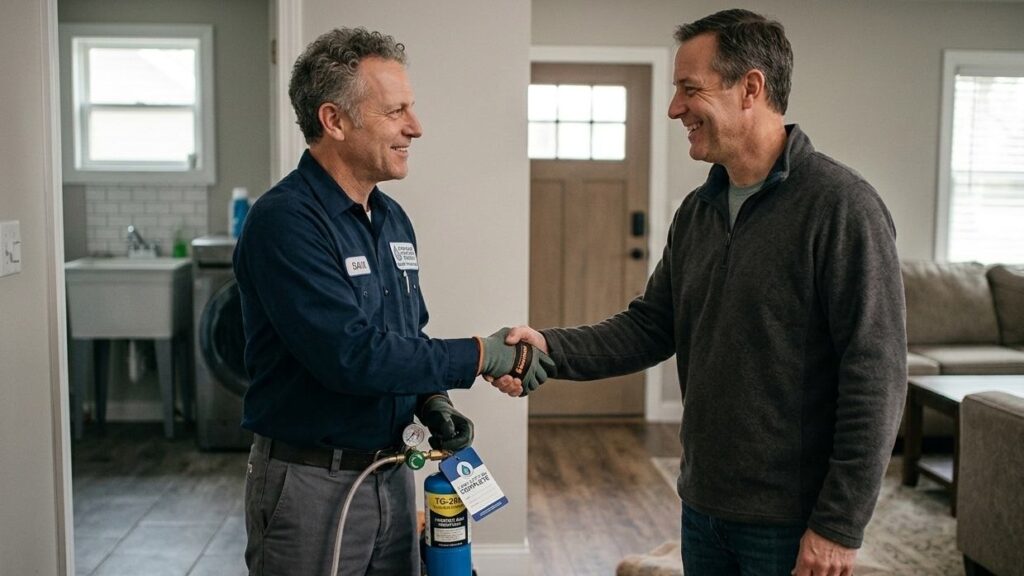
Slow drains. Bad smells. A wet spot in the yard that won’t go away. These signs can point to two very different problems. Sewer leak detection issues and a stubborn sewer clog can look almost identical from the outside. But they’re not the same thing at all. A clog is a blockage inside the pipe. A leak means the pipe itself is broken. One needs clearing, the other needs repair – treating them the same wastes money and leaves the real problem behind.

What Is a Sewer Line Leak?

A sewer line leak happens when a pipe that carries wastewater away from your home develops a crack, a break, or a joint that pulls apart. When that happens, sewage starts escaping into the surrounding soil – and that’s a serious problem.

The damage adds up fast: soil contamination, foundation erosion, and pests drawn in by the moisture. Common causes include aging pipe materials like clay or cast iron, tree root intrusion, and ground shifting.

A sewer pipe leak is a structural failure. It won’t get better on its own. Left long enough, it leads to a full pipe collapse – and the repair bill that comes with it.

What Is a Sewer Clog?

A sewer clog is a blockage that builds up inside the pipe, preventing wastewater from flowing out of your home. The pipe itself may be completely intact – the problem is what’s accumulated inside it.

Grease, hair, soap residue, and “flushable” wipes (which don’t actually break down) are the most common culprits. Clogs can be partial – slowing drainage to a trickle – or complete, causing a full backup through your lowest fixtures.

The main sewer line clog cost is usually much lower than a structural repair. Recurring clogs often point to something deeper – a sagging section of pipe that keeps catching debris no matter how many times it gets cleared.

Warning Signs That Point to a Sewer Leak

Some signs point specifically toward a leak in the sewer line rather than a blockage.

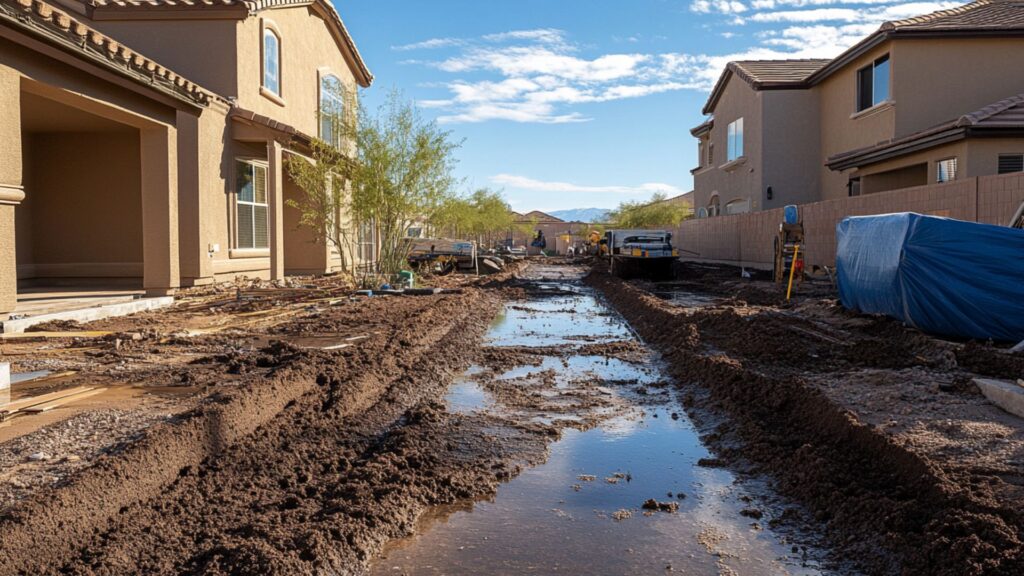
A sewage smell in your yard or basement – even when drains seem fine – is a major red flag. Soggy grass patches, or a lawn section noticeably greener than everything around it, are also signs. That’s a sewer line leak acting like underground fertilizer.

More serious signs include sinkholes forming near your foundation or cracks appearing in interior walls. This means the leaking water has been eroding the soil under your home long enough to start affecting the structure. At that point, the problem needs professional attention right away.

Warning Signs That Point to a Sewer Clog

A sewer clog usually announces itself through your fixtures rather than your yard.

The clearest sign is multiple drains backing up at the same time – your shower fills when you flush the toilet, or your sink gurgles when the washing machine drains. Gurgling pipes, water backing up in the lowest fixtures first, or a toilet water level that rises and falls unpredictably all point toward a main line blockage.

One slow drain usually means a local problem. Several drains acting up at once points to the main line – and that’s when you need sewer line clog repair before things back up completely.

Symptoms That Can Mean Either Problem

Foul odors near your drains and slow drainage can be signs of both a sewer pipe leak and a serious blockage. They’re not exclusive to one problem.

To make it trickier, a clog can actually hide a leak. Debris gets trapped behind a partially collapsed section of pipe, creating a blockage while that same section leaks into the surrounding soil. You get the clog cleared and assume everything is fixed – but the structural damage is still there beneath the surface.

Symptoms alone can’t give you a real answer. A camera inspection is the only way to know for sure.

How Professionals Diagnose the Problem
How-to-Prevent-Sewer
Sewer Leak or Clog: How to Tell the Difference 2

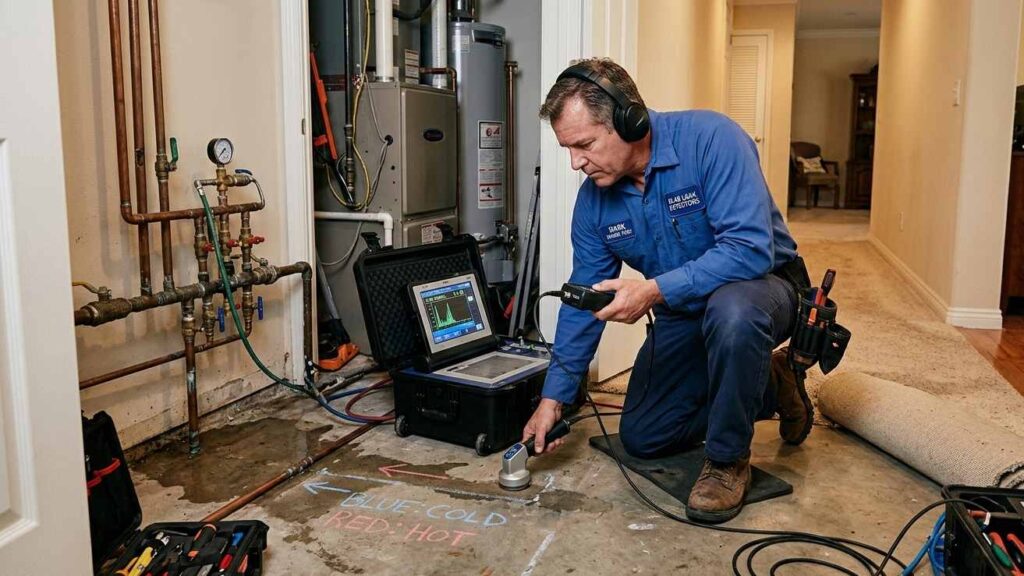
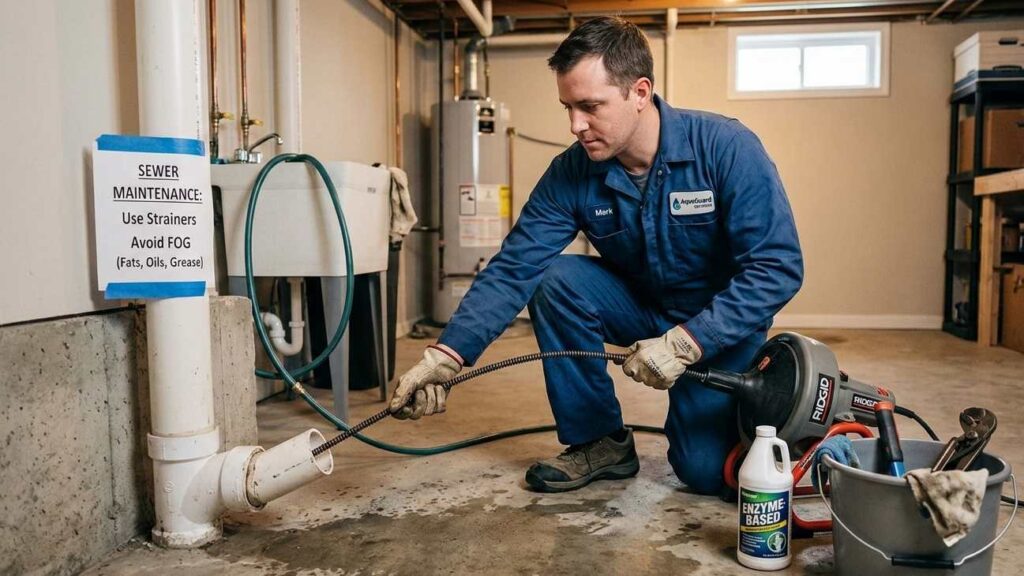
To get a real answer, plumbers use sewer leak detection equipment – most commonly a waterproof video camera fed through the line. The footage shows exactly what’s inside: cracks, root intrusion, collapse, or a blockage.

For sewer leak testing, hydrostatic pressure testing is another option: fill the line with water and watch if the level drops. Smoke testing pumps non-toxic smoke into the pipes – if it rises from your yard or through floor cracks, it marks the exact breach point.

Sewer leak detection via camera inspection is the fastest and most reliable way to get a clear diagnosis – and it ensures the right repair is done the first time.

Sewer Leak Repair: What to Expect

Once a sewer line leak is confirmed, the repair approach depends on the extent of the damage. A spot repair digs up and replaces just the broken section – the right call when damage is isolated. For more widespread issues, trenchless sewer pipe leak repair is usually better: a cured-in-place liner is inserted into the existing pipe and hardened in place, creating a new pipe inside the old one without digging up your yard. If the pipe is too far gone for lining, pipe bursting pulls a new pipe through as the old one breaks apart.

Sewer Clog Repair: What to Expect

When the problem is a blockage, the work shifts to drain clog removal. Mechanical snaking uses a rotating cable to break through hair, paper, and soft buildup. For a more thorough job – heavy grease, mineral scale, or roots – hydro jetting is the better choice. High-pressure water blasts the pipe walls clean and is one of the most effective methods for sewer line clog repair, restoring the pipe to near its original condition.

If tree roots caused the clog, a chemical inhibitor can be applied after cleaning to slow regrowth. Hydro jetting can also reveal pipe damage hidden behind the buildup, in which case, drain clog removal leads straight into a repair.

Cost Comparison: Sewer Leak Repair vs. Clog Clearing

Standard clog clearing typically runs $150-$500. Hydro jetting costs $350-$900 but yields a much more complete result. Either way, the main sewer line clog cost is manageable for most homeowners.

Repairs are a bigger number. Spot sewer pipe leak repair runs $1,000-$4,000, depending on depth and access. Full trenchless lining for the whole line can reach $4,000-$10,000. The upside is that a properly done repair solves the problem instead of delaying it – and ignoring a leak always costs more in the long run.

How to Prevent Sewer Leaks and Clogs

For leak prevention, a camera inspection every few years can catch a leak in the sewer line before it gets expensive. Addressing tree root issues early is far cheaper than waiting until they break through the pipe wall.

For sewer clog prevention: no grease, no “flushable” wipes, nothing that isn’t waste or toilet paper. Sewer leak detection as part of an annual maintenance plan covers both fronts.

Conclusion

A sewer line leak and a sewer clog can look the same from the surface – slow drains, bad smells, wet patches in the yard. But they’re completely different problems that need completely different fixes. Leaks are structural failures that damage your soil, foundation, and property. Clogs need clearing – sometimes with a bigger repair hiding behind them.

The only way to know for sure is a camera inspection. Slow drains and strange smells are your early warning – don’t wait to act on them.
Related Blogs

image block

What to Do After Water Damage from a Leak

You walk into a room, and there’s water on the floor. Or the ceiling is dripping. Your first reaction is panic – but what you do in the next few hours is what really matters. Water leak damage moves fast. It gets into walls, soaks into the ground, and spreads to places you can’t even […]

image block

Why Your Water Bill Suddenly Increased

You open the bill, look at the number, and something’s off. Last month was normal. This month it’s doubled. Nothing changed – or so you think. That kind of sudden water bill increase almost always has a cause, and finding it usually doesn’t take long once you know where to look. Some reasons are simple. […]

image block

Common Leak Sources in Las Vegas Homes

Desert homes have their own set of problems. The heat alone puts stress on plumbing that people in other climates never deal with. Add shifting soil and water so full of minerals it practically chews through pipe fittings, and you get a situation where a water leak Las Vegas homeowners find is rarely simple to […]

image block

Pre-Spring Plumbing Leak Checklist for Las Vegas

Spring is the right time for a full walk-through of your home’s plumbing. Las Vegas has its own set of conditions that make this worth doing every year. The temperature swings between cold nights and warm days put stress on pipe joints and seals. Months of dry weather mask slow leaks that have been building […]

image block

5 Signs You Have a Slab Leak in Your Las Vegas Home

A slab leak is one of the hardest plumbing problems to detect because it’s hidden. The pipes run under the concrete foundation, buried several inches down. By the time there’s visible damage, the leak has usually been going on for a while. Las Vegas homes are especially vulnerable. The “caliche” soil shifts as it dries […]

You walk into a room, and there’s water on the floor. Or the ceiling is dripping. Your first reaction is panic – but what you do in the next few hours is what really matters.

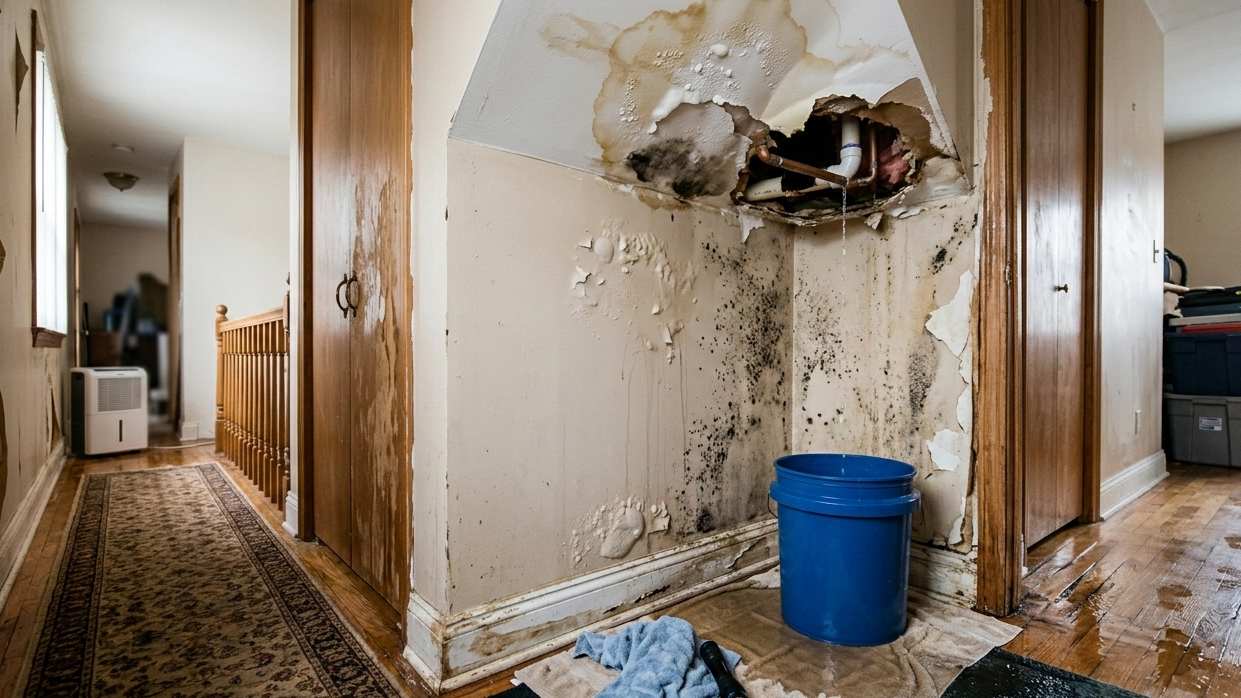
Water leak damage moves fast. It gets into walls, soaks into the ground, and spreads to places you can’t even see. The first 24 to 48 hours decide how bad this gets. Move quickly, and you can keep it manageable. Wait around, and you’re dealing with rot, mold, and a bill that’s a lot harder to swallow.

Stop the Source Before Addressing the Damage

First thing: turn off the water. Everything else waits. You can’t mop up or dry anything out while water is still coming in – you’re just falling further behind. If you can see where it’s coming from (a pipe under the sink or a toilet supply line), turn the shutoff valve for that fixture clockwise until it stops. If you can’t find the source, go straight to the main shutoff valve and cut the water to the whole house.

If it seems like water is coming from inside a wall or under the floor, don’t start poking around – call a plumber. That kind of situation can turn into full plumbing leak damage very quickly.

Immediate Steps in the First 24 Hours

Water’s off. Now work through this list quickly – every step reduces plumbing-leak damage and keeps repair costs down.

  • Electricity first. If water got anywhere near outlets, light switches, or appliances, cut the power to that area at the breaker. Don’t touch anything electrical until you do.
  • Get your stuff out. Move furniture, electronics, rugs – anything you can – to a dry room. Put foil or small pieces of wood under the legs of heavy furniture so they don’t stain the wet floor.
  • Get the water out. Use towels, a wet/dry vac, or a pump if there’s a lot of water. The faster it’s gone, the less it soaks into the floor and walls.
  • Get air moving. Open windows, run fans, use the AC – anything that moves air speeds up drying.
  • Pull up what’s soaked. The wet carpet needs to come up. If the walls near the floor feel damp, pull the baseboards off – this lets the drywall dry out from both sides instead of staying wet inside.

Before you start moving things, take photos and videos of everything. Your insurance company will ask for it.

How to Recognize Early Signs of Water Damage You Might Miss

Not every leak leaves a puddle you can step in. A lot of the time, the early signs of water damage are quiet – and by the time they’re obvious, the problem is already bigger than it had to be.

Watch for: paint bubbling or peeling off a wall. Drywall that feels soft or spongy. A brownish-yellow ceiling stain that slowly grows. A musty smell that appeared out of nowhere. Condensation on windows that were dry before.

All of these are water damage signs that something is wet somewhere nearby. Water doesn’t stay where it lands – it travels along pipes and joists. The early signs of water damage on the surface usually indicate the wet zone extends farther than it appears.

Hidden Damage Behind Walls and Under Floors

How-to-Prevent
What to Do After Water Damage from a Leak 4

What you can see is rarely the full picture. With any water damage leak, moisture gets trapped inside walls, soaks into insulation, and weakens the wooden frame. Mold can start growing in those hidden spots within 48 hours.

Under the floor, moisture between the subfloor and surface makes hardwood buckle and laminate lift – while everything looks fine on top.

This is why plumbers use moisture meters and thermal imaging cameras. If you’re noticing signs of water leaking but can’t find where it’s coming from, that’s the equipment that finds it.

When Mold Becomes a Risk After a Leak

Mold can start growing within 24 to 48 hours – especially on drywall, wood, and insulation. If the wet area wasn’t fully dried in the first day or two, get a mold inspection before closing any walls back up. Look for black, green, or white fuzzy spots. But also pay attention to the invisible signs of water leaking – a damp smell that won’t go away, or people in the house suddenly having allergy symptoms they didn’t have before.

Even if the water leak damage looks dry from the outside, mold can be growing inside the wall. If the affected area is bigger than about 10 square feet, call a professional remediation team. That’s not something to DIY.

Filing an Insurance Claim for Leak Damage

Most home insurance policies cover sudden plumbing failures. What they won’t cover is a slow leak that was ignored for months – insurers call that a maintenance problem.

To make your leak damage repair claim go smoothly:

  • Call your insurance company within 24 hours
  • Send them the photos and videos you took right away
  • Get a written estimate from a restoration company
  • Don’t throw away damaged items until an adjuster has looked at them
  • Save receipts for anything you spent responding to the emergency – fans, wet vacs, a hotel if you had to leave

A leak damage claim is stronger when you can show you acted immediately.

Professional Water Damage Restoration: What the Process Looks Like

For anything more than a small contained spill, bring in professionals. It’s worth it.

A restoration crew maps where the moisture went, pumps out remaining water, then runs commercial dehumidifiers and air movers for three to five days while applying mold-prevention treatments. Once moisture levels are back to normal, water leak damage repair moves into reconstruction.

The reason water-damage leak repairs sometimes fail isn’t that they weren’t fixed – it’s that they weren’t dried properly first. Trapped moisture can lead to rot or mold months later.

Repairing the Damage: What Gets Replaced and What Can Be Saved

A big part of leak damage repair is knowing what to save and what to throw out.

  • Drywall soaked more than a few inches needs to come out – it won’t dry and becomes a mold risk. 
  • Hardwood floors caught early can be dried and sanded; buckling means replacement. 
  • Carpets can sometimes be cleaned, but the padding underneath almost always needs to go. 
  • Solid wood cabinets can usually be saved; particleboard swells and is usually a total loss. 
  • Insulation that gets wet needs to come out – it loses its effectiveness and can hold mold.

Always check for water-damage signs before sealing walls back up – trapped moisture becomes a much bigger problem later.

How to Prevent Future Water Leak Damage

The best water leak damage situation is the one that never happens. A few simple habits make a real difference.

Check the plumbing under sinks and behind toilets once a year – look for drips or rust. Swap out old rubber washing machine hoses for braided stainless steel hoses. Consider a whole-home leak detector that automatically shuts off the main valve if a leak occurs.

Watch your water bill – an unexplained jump is one of the most common water damage signs that something is leaking out of sight. If your house is over 20 years old, a plumbing inspection before something goes wrong is a smart move.

Conclusion

A water damage leak is a race against the clock. The faster you stop the water and start drying, the less damage you’ll have to deal with. Every hour gives moisture more time to travel.Don’t brush off signs of water leaking – a soft spot in the wall, a ceiling stain, a smell that wasn’t there before. Those are the warnings that come before the expensive problems.

Related Blogs

image block

Sewer Leak or Clog: How to Tell the Difference

Slow drains. Bad smells. A wet spot in the yard that won’t go away. These signs can point to two very different problems. Sewer leak detection issues and a stubborn sewer clog can look almost identical from the outside. But they’re not the same thing at all. A clog is a blockage inside the pipe. […]

image block

Why Your Water Bill Suddenly Increased

You open the bill, look at the number, and something’s off. Last month was normal. This month it’s doubled. Nothing changed – or so you think. That kind of sudden water bill increase almost always has a cause, and finding it usually doesn’t take long once you know where to look. Some reasons are simple. […]

image block

Common Leak Sources in Las Vegas Homes

Desert homes have their own set of problems. The heat alone puts stress on plumbing that people in other climates never deal with. Add shifting soil and water so full of minerals it practically chews through pipe fittings, and you get a situation where a water leak Las Vegas homeowners find is rarely simple to […]

image block

Pre-Spring Plumbing Leak Checklist for Las Vegas

Spring is the right time for a full walk-through of your home’s plumbing. Las Vegas has its own set of conditions that make this worth doing every year. The temperature swings between cold nights and warm days put stress on pipe joints and seals. Months of dry weather mask slow leaks that have been building […]

image block

5 Signs You Have a Slab Leak in Your Las Vegas Home

A slab leak is one of the hardest plumbing problems to detect because it’s hidden. The pipes run under the concrete foundation, buried several inches down. By the time there’s visible damage, the leak has usually been going on for a while. Las Vegas homes are especially vulnerable. The “caliche” soil shifts as it dries […]

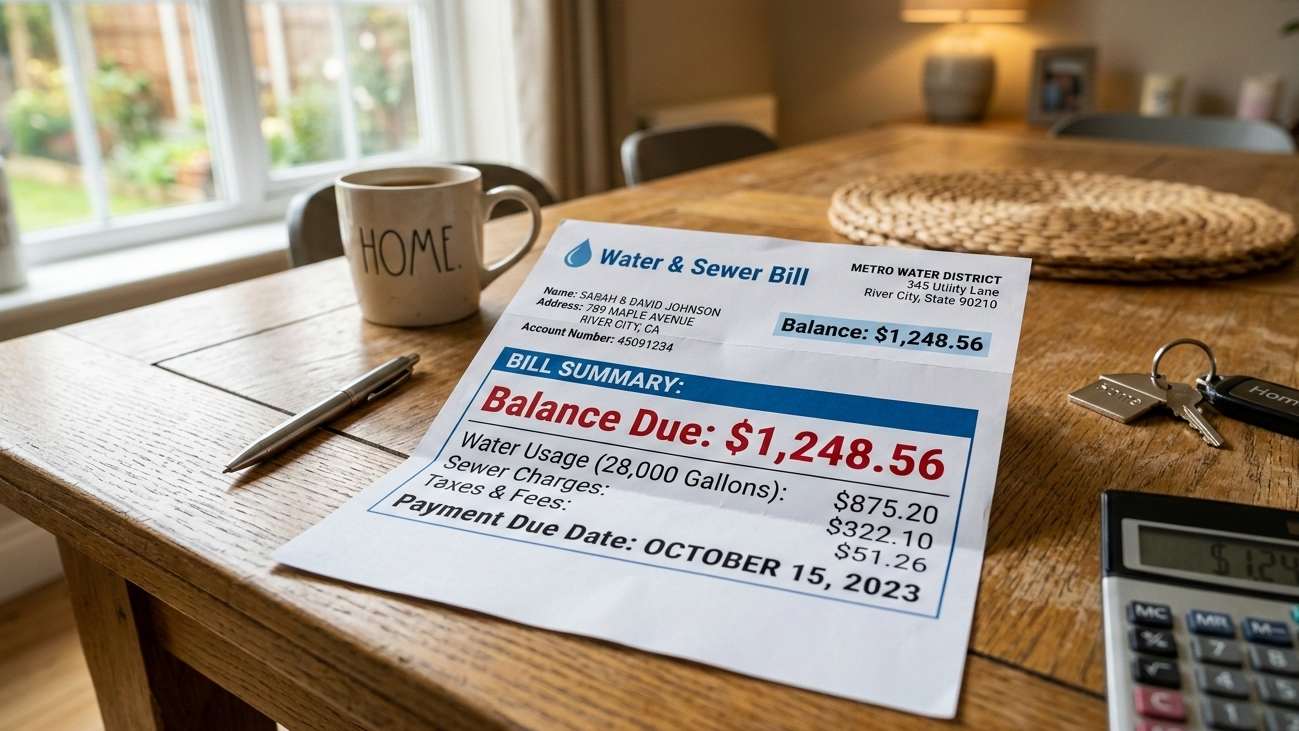
You open the bill, look at the number, and something’s off. Last month was normal. This month it’s doubled. Nothing changed – or so you think. That kind of sudden water bill increase almost always has a cause, and finding it usually doesn’t take long once you know where to look.

Some reasons are simple. Others point to a hidden leak that’s been running 24 hours a day without you knowing. This guide goes through every common cause – starting with the things you can check in five minutes, working up to the stuff that needs a pro.

Rule Out Simple Explanations First

Before you start pulling up floors, check the obvious stuff. In Nevada, a Las Vegas water bill increase often comes down to the season. Summer irrigation runs longer. Filling or topping off a pool uses thousands of gallons. A houseguest staying for two weeks, extra loads of laundry, a kid home from school – all of it pushes usage up.

Also worth knowing: the Las Vegas Valley Water District uses tiered rates. Go over a certain threshold, and your price per gallon jumps. A water bill increase can also just be a longer billing cycle than usual. Pull up your last few bills and compare the actual gallons used, not just the dollar amount.

The Most Common High Water Bill Causes

Once the seasonal stuff is ruled out, the problem is almost always a leak. The most common high water bill causes are quiet ones – water escaping somewhere in the system around the clock. Pipes run under pressure, so even a pinhole drips constantly. The goal is to narrow down where.

Running Toilets

A toilet that runs without stopping is one of the most common high water bill reasons, and most people don’t even know it’s happening. A worn flapper or a bad fill valve can waste 200 gallons a day. You often can’t hear it from the next room.

Test it this way: drop food coloring into the tank and don’t flush for 15 minutes. If the color shows up in the bowl, your flapper is leaking. Fixing a running toilet water bill problem usually costs under $10 in parts and takes about half an hour. It’s almost always the first place worth checking.

Dripping Faucets and Showerheads

How-to-Prevent-Future
Why Your Water Bill Suddenly Increased 6

A single faucet dripping once per second adds up to more than 3,000 gallons a year – enough to cause a sudden water bill increase on its own. Go through every faucet, showerhead, and outdoor spigot in the house, including the ones in rooms you don’t use much. The fix is usually a rubber washer or ceramic cartridge, both cheap and easy to find.

Leaking Irrigation Systems and Outdoor Plumbing

A cracked irrigation pipe or broken drip line buried under soil or rocks can run for months before anyone notices. In Las Vegas, this is one of the most common sources of a Las Vegas water bill increase – and a sudden spike in water bill often traces back to a sprinkler head that snapped off or an underground valve that won’t close fully.

Run each irrigation zone manually and look for pooling water or patches of grass that are greener than the rest. And check your pool’s auto-fill valve. If the float gets stuck open, it’ll keep running water into the pool whether it’s needed or not.

Water Heater and Appliance Leaks

Washing machines, dishwashers, water heaters, ice makers – all of them have connections that wear out. A pressure relief valve on the water heater that drips steadily will result in a high water bill by the end of the month. Check the floor and walls around each appliance for moisture, rust stains, or mineral deposits. A small seep at a hose fitting doesn’t look like much, but it adds up.

When Your Water Bill Is High But You See No Visible Leak

A high water bill with no visible leak anywhere inside the house usually means the problem is underground or inside the walls. High-water-bill, no-visible-leak situations are the trickiest – the water is draining into the soil or under the slab, so there’s nothing to see. The most common culprits are slab leaks (a pipe under your concrete foundation) or a break in the service line that runs from the city meter to your house. Because there’s a high water bill, no leaks you can find, this one needs professional equipment.

How to Check Your Water Meter for a Hidden Leak

Your water meter can confirm whether something is leaking even if you can’t find it. Turn off every faucet, appliance, and irrigation zone in the house. Go out to the meter box near the street and look at the flow indicator – a small triangle, dial, or digital display depending on the model. If it’s moving while everything’s off, water is going somewhere.

For more certainty: read the meter, don’t use any water for two hours, then read it again. If the number changed, you leak. A water bill suddenly high with a moving meter is a clear sign something needs attention – this is how you confirm it without guessing.

What to Do If the Meter Test Confirms a Leak

A sudden increase in the water bill, confirmed by a meter test, means it’s time to call someone. A licensed plumber with leak-detection equipment – acoustic sensors and thermal imaging – can find the break without opening walls unnecessarily. Keep photos and all receipts. A sudden increase in the water bill due to a hidden pipe failure can sometimes qualify for a credit from the water district once the repair is documented.

Can You Get a Refund or Adjustment on a High Water Bill?

Most people don’t get cash back, but utilities do have adjustment programs. A water bill refund or credit is possible if you can show that the high water bill was caused by a legitimate hidden leak repaired by a licensed plumber, and you’ve submitted the invoice. The water district may credit part of the overage – it’s worth asking once the repair is done.

How to Prevent Future Sudden Increases in Your Water Bill

Preventing a sudden spike in water bill is mostly about not ignoring small things:

  • Do the toilet dye test every six months
  • Check appliance hose connections once a year
  • Walk your irrigation lines each spring to catch winter damage
  • Keep an eye on your monthly usage – slow creep over several months is one of the subtler high water bill reasons
  • Look into a smart water monitor if you travel or have a big property

Homes older than 20 years are worth getting inspected periodically. Pipes don’t last forever.

Conclusion

A suddenly high water bill means something changed, and it won’t fix itself. Start with the toilet, the faucets, and the irrigation. If nothing turns up, use the meter test. If the meter’s moving with everything off, you’ve got a hidden leak – and a sudden water bill increase is just the beginning of what it’ll cost if you wait.

Related Blogs

image block

Sewer Leak or Clog: How to Tell the Difference

Slow drains. Bad smells. A wet spot in the yard that won’t go away. These signs can point to two very different problems. Sewer leak detection issues and a stubborn sewer clog can look almost identical from the outside. But they’re not the same thing at all. A clog is a blockage inside the pipe. […]

image block

What to Do After Water Damage from a Leak

You walk into a room, and there’s water on the floor. Or the ceiling is dripping. Your first reaction is panic – but what you do in the next few hours is what really matters. Water leak damage moves fast. It gets into walls, soaks into the ground, and spreads to places you can’t even […]

image block

Common Leak Sources in Las Vegas Homes

Desert homes have their own set of problems. The heat alone puts stress on plumbing that people in other climates never deal with. Add shifting soil and water so full of minerals it practically chews through pipe fittings, and you get a situation where a water leak Las Vegas homeowners find is rarely simple to […]

image block

Pre-Spring Plumbing Leak Checklist for Las Vegas

Spring is the right time for a full walk-through of your home’s plumbing. Las Vegas has its own set of conditions that make this worth doing every year. The temperature swings between cold nights and warm days put stress on pipe joints and seals. Months of dry weather mask slow leaks that have been building […]

image block

5 Signs You Have a Slab Leak in Your Las Vegas Home

A slab leak is one of the hardest plumbing problems to detect because it’s hidden. The pipes run under the concrete foundation, buried several inches down. By the time there’s visible damage, the leak has usually been going on for a while. Las Vegas homes are especially vulnerable. The “caliche” soil shifts as it dries […]

Desert homes have their own set of problems. The heat alone puts stress on plumbing that people in other climates never deal with. Add shifting soil and water so full of minerals it practically chews through pipe fittings, and you get a situation where a water leak Las Vegas homeowners find is rarely simple to fix. Older parts of the city have pipes installed decades ago that are well past their prime.

So, finding the leak source problems early is essential to prevent damage. Today, we’ll explore the most common issues of leak source. We’ll go from underground pipes to bathroom fixtures. We’re here to help you know when to DIY and when to call in a pro.

Slab Leaks: The Hidden Threat Beneath Your Foundation

Slab leaks are what keep homeowners up at night. Most houses here sit on concrete slabs, with copper lines running beneath them. The soil chemistry, combined with the mineral-rich water, slowly corrodes those pipes from the outside. When they go, the leak is sitting under several inches of concrete.

A few things that point to this:

  • Warm spots on the tile floor, especially in the kitchen
  • Water sounds when every faucet in the house is off
  • A bill that jumps with no obvious reason

Slab leaks only get worse. Water seeps through the soil, and over time, it can begin to affect the foundation. Damp baseboards are an early sign worth paying attention to. A quick slab leak repair Las Vegas homes team can find the break with detection equipment – no tearing up the floor until they know exactly where the problem is.

Leaky Faucets and Fixtures

A drip once per second sounds like nothing. It’s over 3,000 gallons a year. Leaky faucets in Las Vegas fail faster than most places because of what’s in the water. Hard water damage from calcium and magnesium eats through rubber washers, O-rings, and cartridges – the parts that keep a faucet from dripping.

Kitchen sink, bathroom sinks, outdoor hose bibs – check them all. A faucet left dripping long enough corrodes the whole fixture and forces a replacement. The fix when you catch it early is usually a $5 part.

Running Toilets

A running toilet can use 200 gallons or more a day. Most of the time, you can’t hear it from another room. A flapper valve that won’t seal, or a fill valve that keeps going after the tank is full – those are the usual problems.

Drop some food coloring in the tank. Don’t flush. If the color shows up in the bowl within 15 minutes, you’ve found it. The minerals in Las Vegas water wear down the rubber and plastic parts faster than normal. When you replace them, look for mineral-resistant components – they hold up better.

Water Heater Leaks and Failures

When-to-Call-a-Professional
Common Leak Sources in Las Vegas Homes 8

Water heater issues happen earlier here than in most other places. Mineral scale settles to the bottom of the tank, insulating the heating element and forcing it to work harder. The metal heats unevenly, corrodes, and eventually goes. Water heater issues often announce themselves as a drip from the pressure relief valve or a small puddle at the base.

The problem is that water heaters usually live in garages, and nobody looks at them. A slow leak can sit there for weeks. Flush the tank once a year, and you’ll pull out a surprising amount of scale – and add years to the unit’s life.

Clogged Drains That Lead to Leaks

Most people think clogged drains are just an inconvenience. They can actually cause pipe damage. A blocked line – grease, hair, mineral scale – builds pressure in the system. That pressure pushes on joints and seals. Eventually, something gives.

A sink that backs up regularly isn’t just slow drainage. It’s a sign that something is going on further down the line. A sewer repair Las Vegas plumber can run a camera through the pipe to check for a collapse or a serious blockage before it becomes a much bigger repair.

Low Water Pressure as a Leak Indicator

One fixture with low water pressure is usually a dirty aerator – clean it, and you’re done. Pressure dropping throughout the whole house is a problem entirely different from this one. That typically means water is escaping somewhere in the main supply line before it reaches your faucets.

Check the main shutoff valve and the pressure regulator first. If both are fine and the pressure is still weak, there’s a break in the line somewhere. That’s a source of water leak you won’t find without either a meter check or someone with the right equipment.

Sewer Line Leaks and Breaks

Sewer line problems are genuinely unpleasant. In older neighborhoods, clay and cast-iron pipes crack as the ground shifts under them. Desert tree roots go deep in search of moisture, and they find sewer pipes – working into joints and splitting them open. That’s one of the most common reasons for a sewer repair call in Las Vegas.

Bad smells in the yard, toilets that gurgle, a patch of grass that’s weirdly green – those are the signs. A sewer leak isn’t just a plumbing problem. It’s a health hazard, and one near the foundation can erode the soil underneath and create a second, bigger problem.

The Role of Hard Water in Accelerating Leaks

Las Vegas water has some of the highest mineral content in the country. The hard water damage it causes is ongoing – scale builds up inside copper pipes, narrows them down, and raises pressure. It coats water heater components. It wears out valves and seals faster than they should.

Hard water damage is why so many Las Vegas plumbing problems appear earlier than industry averages suggest. A whole-home water softener doesn’t eliminate maintenance, but it does significantly slow down the damage.

How to Identify the Source of a Water Leak

Start with a visual sweep. Under every sink, around every toilet base, around the water heater. If nothing shows up but something still seems off, go to the meter.

Shut off all water in the house. Watch the meter dial. If it moves, something is leaking. Listen for water sounds inside the walls. Look for discolored spots on ceilings. If the source of the water leak is still unclear, a plumber with acoustic detection equipment can locate it without opening walls. That’s the smarter approach.

Track the source of the water leak before the water does the tracking for you – through drywall, flooring, or worse.

When to Call a Professional for Water Leak Repair

A running toilet or a straightforward faucet swap – those are reasonable DIY jobs. Anything behind a wall, under the floor, or near the main supply line is a different matter. Call for water leak repair in Las Vegas service before you start guessing.

Attempting a quick slab leak repair in Las Vegas homes without proper leak detection equipment almost always makes the situation worse. Licensed plumbers who know the local codes, the soil conditions, and the specifics of Las Vegas water systems handle water leak repair Las Vegas jobs without turning a targeted repair into a full renovation.

Conclusion

Las Vegas plumbing gets hit from every direction – heat, mineral water, and soil that doesn’t stay still. Some water-leak situations in Las Vegas are going to come up for most homeowners here. Homes that skip routine checks often find out about a water leak in Las Vegas the expensive way.

Check under sinks. Watch the bill. Listen for water where there shouldn’t be any. If something seems off, call Leak Experts.

Related Blogs

image block

Sewer Leak or Clog: How to Tell the Difference

Slow drains. Bad smells. A wet spot in the yard that won’t go away. These signs can point to two very different problems. Sewer leak detection issues and a stubborn sewer clog can look almost identical from the outside. But they’re not the same thing at all. A clog is a blockage inside the pipe. […]

image block

What to Do After Water Damage from a Leak

You walk into a room, and there’s water on the floor. Or the ceiling is dripping. Your first reaction is panic – but what you do in the next few hours is what really matters. Water leak damage moves fast. It gets into walls, soaks into the ground, and spreads to places you can’t even […]

image block

Why Your Water Bill Suddenly Increased

You open the bill, look at the number, and something’s off. Last month was normal. This month it’s doubled. Nothing changed – or so you think. That kind of sudden water bill increase almost always has a cause, and finding it usually doesn’t take long once you know where to look. Some reasons are simple. […]

image block

Pre-Spring Plumbing Leak Checklist for Las Vegas

Spring is the right time for a full walk-through of your home’s plumbing. Las Vegas has its own set of conditions that make this worth doing every year. The temperature swings between cold nights and warm days put stress on pipe joints and seals. Months of dry weather mask slow leaks that have been building […]

image block

5 Signs You Have a Slab Leak in Your Las Vegas Home

A slab leak is one of the hardest plumbing problems to detect because it’s hidden. The pipes run under the concrete foundation, buried several inches down. By the time there’s visible damage, the leak has usually been going on for a while. Las Vegas homes are especially vulnerable. The “caliche” soil shifts as it dries […]

Spring is the right time for a full walk-through of your home’s plumbing. Las Vegas has its own set of conditions that make this worth doing every year. The temperature swings between cold nights and warm days put stress on pipe joints and seals. Months of dry weather mask slow leaks that have been building since fall. And once the heat kicks in, water usage jumps – irrigation systems, pool maintenance, evaporative coolers all running at once.

A spring plumbing checklist done now catches small problems before they become expensive ones. Here’s how to go through the whole house.

Check Every Faucet for Drips and Slow Leaks

Start with every faucet in the house – kitchen, bathrooms, utility sink, wet bar. Turn each one on and off, then wait a moment to see if the faucet drips appear after the handle is closed. Check the base of the faucet for moisture or white mineral crust. Las Vegas hard water is rough on rubber washers and cartridges, accelerating their failure.

Get under the sinks with a flashlight. Look at the supply line connections for dampness, green corrosion, or water stains on the cabinet floor. These are early signs of a leak that hasn’t yet become obvious. Good plumbing spring tips start here – faucet drips caught early cost a few dollars to fix. Left alone, they corrode the whole fixture.

Test Every Toilet for Leaks and Proper Function

Toilets are behind more hidden water waste than most people realize. To check for toilet leaks, try the food coloring test. Add a few drops of dark dye to the tank and wait 15 minutes without flushing. If the color shows up in the bowl, the flapper is leaking and needs to be replaced.

Also listen for phantom flushing – when the toilet starts refilling on its own, even when not in use. Make sure all toilets flush completely and that the water level in the tank returns to the right height. Then look at the floor around the base. Discoloration or moisture there means the wax ring seal may be going. The mineral content in Las Vegas water wears through these internal parts faster than the national average, so toilet leaks here tend to show up sooner than most homeowners expect.

Inspect Your Water Heater Before Demand Increases

The water heater tank works hard year-round, but spring is a good time to check it before summer demand picks up. Walk around the unit and look for rust, moisture, or mineral deposits. Test the temperature-pressure relief valve by lifting the lever briefly – water should flow and stop cleanly when you release it.

Check the pipe connections at the top for green or white corrosion. In Las Vegas, scale builds up inside the tank, lowers efficiency, and eventually causes the metal to rust through. Catching this during spring plumbing leak detection can extend the unit’s life and keep energy bills from creeping up without explanation.

Inspect Outdoor Hoses, Spigots, and Irrigation Lines

Spring-Maintenance
Pre-Spring Plumbing Leak Checklist for Las Vegas 10

Outdoor plumbing takes a beating from the sun and heat. Disconnect all outdoor hoses and check each spigot for drips. Turn the valves on and off to make sure they seal properly. Inspect the hoses themselves for cracks or bulges from UV exposure – those can burst under pressure.

Run the irrigation system zone by zone and walk the yard while it’s running. Look for broken sprinkler heads, pooling water, or patches of grass that are wetter than the rest. Those points point to a cracked underground line. Also, check the backflow preventer for visible leaks.

Outdoor hoses and irrigation are usually behind the biggest springtime bill spikes. A single broken underground drip line can run for weeks before anyone notices.

Check Your Sump Pump If You Have One

Not every Las Vegas home has a sump pump, but houses near desert washes or with below-grade rooms often do. To test it, pour a large bucket of water into the pump pit. The float should rise, the pump should kick on, and the water should drain quickly before the unit shuts itself off. Make sure the discharge line is clear and that it’s carrying water far enough from the foundation.

Examine Plumbing Vent Pipes on the Roof

Plumbing vent pipes stick up through the roof and are sealed with rubber boots or metal flashing. In the Las Vegas sun, those rubber seals crack and crumble faster than in most climates. When they go, rainwater can get in through the roof and run down inside the walls.

You can often spot a cracked boot from the ground with binoculars – you don’t have to get on the roof to check. If you do go up, look for debris blocking the pipe opening as well. A blocked vent can cause gurgling drains and create pressure problems that contribute to toilet leaks inside the house.

Look for Signs of Hidden Leaks Throughout the House

After checking the specific fixtures, do a general walk-through for anything that looks off. Spring plumbing leak detection isn’t just about the obvious spots – look at walls and ceilings for new water stains, bubbling paint, or soft patches. Check baseboards for warping or gaps pulling away from the wall.

Open every cabinet under a sink and feel the wood for dampness. Walk across tile or laminate floors barefoot – warm or spongy spots are classic slab-leak signs. And check the water meter when nothing in the house is running. If the dial is moving, there’s a leak somewhere. That one check is worth doing on its own as part of your annual spring plumbing leak detection routine.

Spring Maintenance Tasks That Prevent Future Leaks

A few tasks that go beyond just checking for leaks:

Flush the water heater tank to remove mineral buildup at the bottom. Clean the aerators on faucets to restore flow. If your washing machine still uses rubber hoses, swap them for braided stainless steel – rubber hoses typically last 5 years, and failures are sudden.

Check your home’s water pressure with a basic gauge. In Las Vegas, it should sit between 40 and 80 psi. Above that, every pipe joint and seal in the house is under more stress than it should be. High pressure is one of the less visible plumbing tips for spring that actually prevents many failures down the line.

These are the kind of plumbing tips for spring that take 20 minutes but add years to how long your plumbing lasts. Following plumbing spring tips like these each year makes the difference between reactive repairs and just staying ahead of things.

Conclusion

Going through this spring plumbing checklist takes about an hour. Most of it doesn’t need any special tools or experience. But it can save thousands in repairs and water waste over a Las Vegas summer. Catch a drip, a running toilet, or a cracked irrigation line now, and you won’t be dealing with it when it’s 110 degrees outside and everything is running at full capacity.Bookmark this spring plumbing checklist and go through it every year. And if you find something that needs a pro, Leak Experts USA is available 24/7.

Related Blogs

image block

Sewer Leak or Clog: How to Tell the Difference

Slow drains. Bad smells. A wet spot in the yard that won’t go away. These signs can point to two very different problems. Sewer leak detection issues and a stubborn sewer clog can look almost identical from the outside. But they’re not the same thing at all. A clog is a blockage inside the pipe. […]

image block

What to Do After Water Damage from a Leak

You walk into a room, and there’s water on the floor. Or the ceiling is dripping. Your first reaction is panic – but what you do in the next few hours is what really matters. Water leak damage moves fast. It gets into walls, soaks into the ground, and spreads to places you can’t even […]

image block

Why Your Water Bill Suddenly Increased

You open the bill, look at the number, and something’s off. Last month was normal. This month it’s doubled. Nothing changed – or so you think. That kind of sudden water bill increase almost always has a cause, and finding it usually doesn’t take long once you know where to look. Some reasons are simple. […]

image block

Common Leak Sources in Las Vegas Homes

Desert homes have their own set of problems. The heat alone puts stress on plumbing that people in other climates never deal with. Add shifting soil and water so full of minerals it practically chews through pipe fittings, and you get a situation where a water leak Las Vegas homeowners find is rarely simple to […]

image block

5 Signs You Have a Slab Leak in Your Las Vegas Home

A slab leak is one of the hardest plumbing problems to detect because it’s hidden. The pipes run under the concrete foundation, buried several inches down. By the time there’s visible damage, the leak has usually been going on for a while. Las Vegas homes are especially vulnerable. The “caliche” soil shifts as it dries […]

A slab leak is one of the hardest plumbing problems to detect because it’s hidden. The pipes run under the concrete foundation, buried several inches down. By the time there’s visible damage, the leak has usually been going on for a while.

Las Vegas homes are especially vulnerable. The “caliche” soil shifts as it dries and rehydrates, placing constant physical stress on buried copper pipes. The water here is also extremely hard, with a high mineral content that can corrode the inside of pipes over time. Ignore the signs of a slab leak long enough, and you’re not just dealing with a plumber. You’re dealing with structural damage to the foundation.

Slab leak detection Las Vegas specialists see this regularly. Catching it early is what keeps a manageable repair from turning into a serious one.

How To Spot A Slab Leak Before It Destroys Your Foundation

You can’t see the pipes, so you look for what they leave behind. Here are the main things to watch for:

  • A sudden jump in your water bill. If nothing changed in your household routine but the bill doubled, water is escaping somewhere. A high water bill slab leak is one of the most common early signs – a pinhole leak under pressure can waste over 10,000 gallons in a single month.
  • A hot spot on the floor. Walk across your tile or laminate flooring barefoot. Feel a patch that’s noticeably warmer than the rest? That’s a hot spot on the floor: a water leak from a hot water line, heating the soil and concrete above it.
  • The sound of running water when nothing is on. A faint hissing or rushing sound with every faucet turned off is a clear signal.
  • Damp flooring or mold at the baseboards. Moisture working up through the slab shows up here first.
  • New cracks in drywall or stucco. When saturated soil shifts beneath the foundation, the structure above it moves as well.

These signs of a slab leak don’t always appear at the same time. Often it starts with one – a slightly higher bill, a warm floor – and others follow over weeks.

Why Your Water Bill Keeps Rising Without Explanation

Rising utility costs are easy to blame on rate increases or seasonal changes. But a high water bill slab leak is often what’s actually happening. In Las Vegas, water pressure is kept high to serve a large and growing city in the desert. When a pipe develops even a small hole, the municipal pressure turns it into something close to a high-pressure nozzle running 24 hours a day.

That water goes into the soil under your home. It doesn’t just run up your bill – it washes away the fine particles that support the concrete slab. When enough of that material erodes, the slab starts to lose its support. That’s when you start seeing cracks and structural movement that costs far more to fix than the original pipe.

Check your water meter when nothing in the house is running. If the leak indicator dial is moving, call for slab leak detection in Las Vegas before the bill climbs further.

Hot Spots On Your Floor Are A Red Flag

A hot spot on the floor, a water leak, is one of the clearest signs of a slab leak, and one of the most specific. It only happens when the hot water line is leaking. The escaping water heats the surrounding soil, and concrete conducts heat well enough that you feel it through the floor covering above.

In the past, finding the source meant guessing and jackhammering multiple spots. Modern slab leak detection in Las Vegas uses thermal imaging cameras that show the heat pattern under the floor, and acoustic equipment that listens through the concrete. Between the two, a technician can locate the exact break without moving furniture or opening up the floor unnecessarily.

A hot spot on the floor water leak caught early means a targeted repair. Left for months, the same leak can lead to shifting soil, foundation movement, and a much bigger job.

What Causes Slab Leaks In Las Vegas Homes

Why-Fast-Slab
5 Signs You Have a Slab Leak in Your Las Vegas Home 12

Two main factors make Las Vegas homes more prone to slab leaks than most of the country.

  • The soil. It’s “expansive” – it swells when wet and shrinks when dry. That constant movement shifts the pipes buried underneath. Over the years, the pipe rubs against rocks or the concrete, and the friction wears it down.
  • The water. Las Vegas has extremely hard water. The minerals in it react with older copper pipe walls and slowly corrode them from the inside. The pipe gets thinner until a pinhole forms. Add high water pressure to a weakened pipe, and it’s only a matter of time.

This is why the signs of a slab leak tend to appear gradually. A slightly higher bill one month. A hot spot on the floor, a water leak a few weeks later. The leak was there the whole time, just getting worse.

Slab Leak Repair Options And What They Cost

Once a leak is confirmed, there are a few ways to fix it. The right approach depends on the pipe’s age, location, and how bad the damage is:

  • Spot repair – opening the slab at the exact leak location and replacing the damaged section. Common fix for newer homes with otherwise good pipes.
  • Pipe rerouting – running a new line through walls or the attic instead of breaking the floor. Often preferred when the flooring is expensive or the pipe is in a difficult spot.
  • Epoxy lining – a coating pumped through the pipe to seal the leak from the inside. Works well for certain situations.
  • Full repipe – replacing the whole system. The most expensive option, but often the most cost-effective long-term, when pipes are old and corroding throughout.

The slab leak cost Las Vegas homeowners typically see runs from around $600 to $4,000 or more. A simple spot repair lands on the lower end. A full reroute or repipe of a large home will be on the higher end. The depth of the pipe, the type of flooring, and how long the leak has been running all affect the final number. Many homeowners’ insurance policies cover “cost of access” – meaning the demolition and repair of the concrete and flooring, which can take a significant chunk off the bill.

Why Fast Slab Leak Detection Saves You Money

Every month a slab leak runs, the repair gets more expensive. The water keeps eroding soil, the foundation keeps shifting, and eventually you’re dealing with doors that won’t close and windows that crack. Foundation leveling can cost five times as much as a standard slab leak repair in Las Vegas.

The slab leak detection cost in Las Vegas is relatively low, and modern equipment makes it fast – most leaks are located within an hour or two using acoustic and thermal tools. That’s a small investment compared to what would happen if the leak ran for another six months.If you’re seeing any of the warning signs – a rising bill, a warm floor, sounds of water with everything off – Leak Experts USA offers slab leak detection in Las Vegas and slab leak repair Las Vegas services across the valley.

Related Blogs

image block

Sewer Leak or Clog: How to Tell the Difference

Slow drains. Bad smells. A wet spot in the yard that won’t go away. These signs can point to two very different problems. Sewer leak detection issues and a stubborn sewer clog can look almost identical from the outside. But they’re not the same thing at all. A clog is a blockage inside the pipe. […]

image block

What to Do After Water Damage from a Leak

You walk into a room, and there’s water on the floor. Or the ceiling is dripping. Your first reaction is panic – but what you do in the next few hours is what really matters. Water leak damage moves fast. It gets into walls, soaks into the ground, and spreads to places you can’t even […]

image block

Why Your Water Bill Suddenly Increased

You open the bill, look at the number, and something’s off. Last month was normal. This month it’s doubled. Nothing changed – or so you think. That kind of sudden water bill increase almost always has a cause, and finding it usually doesn’t take long once you know where to look. Some reasons are simple. […]

image block

Common Leak Sources in Las Vegas Homes

Desert homes have their own set of problems. The heat alone puts stress on plumbing that people in other climates never deal with. Add shifting soil and water so full of minerals it practically chews through pipe fittings, and you get a situation where a water leak Las Vegas homeowners find is rarely simple to […]

image block

Pre-Spring Plumbing Leak Checklist for Las Vegas

Spring is the right time for a full walk-through of your home’s plumbing. Las Vegas has its own set of conditions that make this worth doing every year. The temperature swings between cold nights and warm days put stress on pipe joints and seals. Months of dry weather mask slow leaks that have been building […]

Underneath every home in Las Vegas, there are pipes – water pipes and sewer pipes. They are embedded directly into the concrete foundation slab. And when one of these pipes bursts or starts to leak, that’s a slab leak. It might seem like no big deal – it’s just leaking somewhere down there, right? But, you can’t see it. The water quietly does its job under the concrete, destroying the foundation, and by the time the problem becomes noticeable. That’s why you need to learn about slab leak signs as soon as possible so that you can catch the problem early on – before it’s too late.

How to Recognize the Most Common Slab Leak Signs

The problem is that you can’t just look under the foundation and see what’s going on. The concrete hides everything. That’s why detecting slab leaks is more about observing indirect signs. Any slab leak signs on their own is a reason to be wary.

Unexpected Increase in Your Water Bill

The first thing people usually notice is their water bill. You haven’t changed anything, but the number has gone up. A hidden slab leak in your water line can drain hundreds or thousands of gallons into the ground every month – and it will show up on your bill.

Sound of Running Water When Everything Is Off

This is one of those moments that is really scary. You know for sure that everything is turned off, but from somewhere under the floor or in the wall, you can hear water running. A quiet hissing or gurgling sound. This is a plumbing slab leak – water under pressure is coming out of the pipe and has nowhere to go.

Warm Spots on the Floor

Signs-of-a-Sewer-Leak
Slab Leak Signs in Las Vegas Homes 15

Let’s say you’re walking around the house barefoot and suddenly you feel that one area of the floor is noticeably warmer than the rest. If a hot-water pipe has burst under the slab, heat is seeping through the concrete to the surface. Of course, one warm spot is not a death sentence. But when combined with other symptoms on this list, it’s a serious warning sign.

Damp Flooring, Warped Surfaces, or Wet Baseboards

The carpet is wet, even though no one has spilled anything. Laminate or parquet flooring is swollen in one place. This is a plumbing leak in a slab foundation in action – water is slowly seeping through the concrete and reaching your floor. This doesn’t happen overnight. Therefore, even slight dampness that you can’t explain is already a reason to call someone for diagnostics.

Mold or Persistent Musty Smell

You know that musty smell – like in an old basement? If it has appeared in your home and persists after cleaning, airing out, or replacing the air conditioner filters, it’s not dirt. Most likely, there is moisture somewhere under the floor, and mold has already begun to grow.

Mold isn’t just unpleasant; it’s a real health risk. Plus, if you let it go, you’ll have to pay not only for slab leak repair, but also for complete mold removal.

Cracks in Walls or Foundation

Water from a damaged pipe erodes the soil under the foundation. The slab settles unevenly, and cracks appear. On the walls, in the tiles, sometimes in the concrete itself. It’s important not to panic prematurely.

Thin cracks are normal for a house settling, nothing to worry about. But if the cracks get wider, new ones appear, and at the same time you notice something else from this article – moisture, odor, rising bills – this is one of the slab leak causes that really threatens the foundation.

Signs of a Sewer Leak Under Your Slab

What-to-Do-If-You
Slab Leak Signs in Las Vegas Homes 16

Not every leak under the house is a water pipe. It can be worse: a sewer leak under the slab, i.e., a hole in the sewer pipe. The insidious thing is that your water bill will not increase – after all, the water is already used, it is going out, not coming in. But other signs appear:

  • The smell of sewage from drains or directly from under the floor
  • The toilet gurgles strangely, even though no one is using it
  • The grass near the foundation has suddenly become suspiciously green and lush
  • Water drains slowly throughout the house

What Causes Slab Leaks in Las Vegas?

Why does this happen in the first place? Here are the main slab leak causes encountered in Vegas (slab leaks in Las Vegas are not uncommon, but rather the norm):

  • Hard water and aggressive minerals in the soil corrode the pipes
  • The soil shifts, and the pipes rub against concrete and gravel
  • The water pressure in the system is too high, and this affects the joints
  • Desert temperature fluctuations: +45 during the day, +20 at night – the metal constantly expands and contracts

None of these factors will kill a pipe in a day. They work together, accumulate over the years, and then you get a plumbing slab leak.

A Simple Slab Leak Test You Can Do at Home

There is one slab leak test that anyone can do. All you need is your water meter and two hours of patience. Here’s what to do:

  • Turn off absolutely everything that uses water. Absolutely everything, even the ice maker in the refrigerator.
  • Write down the meter reading.
  • Leave the house or just don’t touch the water for two hours.
  • Come back and check the numbers. If the readings have changed, you have a slab leak.

Another life hack: most meters have a small triangular indicator. If it spins when the water is completely turned off, there is definitely a leak. However, this test will only tell you “yes, there is a problem.” Where exactly – that’s up to a specialist to determine.

How Professional Slab Leak Detection Works

Professional slab leak detection in Las Vegas is not about using a sledgehammer or “let’s break the whole floor and see.” Nowadays, technologies are used that find leaks without causing damage:

  • Acoustic sensors amplify the sound of water in the pipe – a specialist can literally hear where it is leaking.
  • A thermal imager shows temperature anomalies on the floor surface.
  • The pressure in the pipes is tested to understand which line is damaged.
  • For sewer systems, video cameras can be inserted from the inside to show everything in real time.

The essence of detecting slab leaks professionally is accuracy. The more accurately the location is found, the less floor will have to be broken and the cheaper the repair will be.

What to Do If You Notice Slab Leak Warning Signs

Okay, you’ve read the article and checked it out; a few points match. What to do next? Don’t panic, but don’t delay either:

  • Take pictures of anything that looks suspicious, such as wet spots, cracks, or meter readings. Write down the dates – this will be useful for insurance purposes.
  • If the leak is clearly severe, shut off the main water valve.
  • Call a specialist who specializes in foundation work.
  • Call your insurance company before starting repairs to find out what is covered and what is not.

Every day of delay means more water under the house, more damage, and more money. Slab leak detection in Las Vegas is a necessity for a quick response. If the situation is urgent, there is an emergency service that operates 24/7.

Slab Leak Repair Options for Las Vegas Homeowners

Once the leak has been located, the question arises: how to repair it? The options for slab leak repair in Las Vegas depend on the specific situation:

  • Spot repair. A specific section of the slab is opened up, the pipe is accessed, and the damaged section is replaced.
  • Redirection. The damaged section is shut off, and a new pipe is routed through the wall or attic.
  • Epoxy lining. The pipe is coated on the inside with a special compound that seals small cracks.

The method chosen depends on where the leak is, how worn the pipes are, and how your home is constructed. A slab leak repair Las Vegas specialist will explain everything before starting work, not after.

Conclusion

Now you know what slab leak signs look like, even if you can’t see the leak itself. Slab leaks are a common problem in Las Vegas, and the sooner you fix it, the less you’ll pay for the consequences.Order slab leak detection in Las Vegas from our pros and start with a proper diagnosis. It’s faster, cheaper, and less stressful than waiting for things to get worse.

Have a leak? Don’t wait.

Call Leak Experts USA today for fast, professional service in Las Vegas.

📞 (702) 745-5571

Related Blogs

image block

Sewer Leak or Clog: How to Tell the Difference

Slow drains. Bad smells. A wet spot in the yard that won’t go away. These signs can point to two very different problems. Sewer leak detection issues and a stubborn sewer clog can look almost identical from the outside. But they’re not the same thing at all. A clog is a blockage inside the pipe. […]

image block

What to Do After Water Damage from a Leak

You walk into a room, and there’s water on the floor. Or the ceiling is dripping. Your first reaction is panic – but what you do in the next few hours is what really matters. Water leak damage moves fast. It gets into walls, soaks into the ground, and spreads to places you can’t even […]

image block

Why Your Water Bill Suddenly Increased

You open the bill, look at the number, and something’s off. Last month was normal. This month it’s doubled. Nothing changed – or so you think. That kind of sudden water bill increase almost always has a cause, and finding it usually doesn’t take long once you know where to look. Some reasons are simple. […]

image block

Common Leak Sources in Las Vegas Homes

Desert homes have their own set of problems. The heat alone puts stress on plumbing that people in other climates never deal with. Add shifting soil and water so full of minerals it practically chews through pipe fittings, and you get a situation where a water leak Las Vegas homeowners find is rarely simple to […]

image block

Pre-Spring Plumbing Leak Checklist for Las Vegas

Spring is the right time for a full walk-through of your home’s plumbing. Las Vegas has its own set of conditions that make this worth doing every year. The temperature swings between cold nights and warm days put stress on pipe joints and seals. Months of dry weather mask slow leaks that have been building […]

image block

5 Signs You Have a Slab Leak in Your Las Vegas Home

A slab leak is one of the hardest plumbing problems to detect because it’s hidden. The pipes run under the concrete foundation, buried several inches down. By the time there’s visible damage, the leak has usually been going on for a while. Las Vegas homes are especially vulnerable. The “caliche” soil shifts as it dries […]

Have you received a water bill with an unusual amount? Nothing has changed: same habits, same schedule, no one filled the pool or watered the yard for three hours straight. But the bill is still significantly higher than usual? In most cases, the reason is simple – there is a leak somewhere. Not visible, not from a tap, but quietly, in the wall, under the floor, in a pipe outside.

Hidden leaks don’t just eat into your budget. They slowly damage the foundation, the walls, everything around them. And the most upsetting thing is that the homeowner is the last to find out (already in the unfortunate situation of having to pay a lot).

In this article, we will look at how to check a water meter for leaks – step by step, without any special tools. We will tell you what to look for, how to read the meter, and when it’s time to stop searching the internet for answers and start calling the professionals. If you suspect a water meter leak, spend 10 minutes reading this article. It could save you thousands.

Understanding How a Water Meter Detects Leaks

Let’s first figure out how the meter works. Inside it is a mechanism that responds to the movement of water through the pipe. When you turn on the tap, the water flows, the meter spins, and the numbers increase accordingly. Turn off the water, and everything stops. The logic is simple.

Now imagine this: you’ve turned off everything you can. Everything, including the washing machine and dishwasher. But the needle or numbers on the meter keep moving. Maybe a little, maybe slowly, but they’re moving. That means water is still flowing somewhere. That’s how the detection principle works: the meter doesn’t lie. If it shows consumption, there is consumption.

Many modern models have a special leak indicator on the water meter – a small triangle or star. It reacts even to the slightest flow. We will talk about it in more detail below. But the bottom line is that even a slight water meter leakage is visible if you know where to look.

Step-by-Step Water Leak Test Using Your Meter

Common-Signs
How to Check for a Water Leak Using Your Meter 18

Okay, let’s move on to the practical part. Here’s how to conduct a water leak test yourself – it’s really simple:

  • Step 1: Turn off absolutely everything that consumes water in the house. Taps, showers, dishwashers, washing machines, irrigation systems, ice makers in refrigerators, and boilers. Even if it seems like “it’s not working right now,” turn it off. Check the toilet too: sometimes water leaks from the tank without you noticing.
  • Step 2: Go to the meter and write down the readings. Take a photo with your phone – it’s more reliable than memorizing.
  • Step 3: Distract yourself for a while. Do not touch the water for 30-60 minutes. Ideally, do not touch the water for about an hour. The longer you wait, the more accurate the result will be. You can go for a walk in the fresh air during this time.
  • Step 4: Come back and check the readings again. Take another photo of the meter to see the recorded numbers.
  • Step 5: Compare the numbers. If they have changed even slightly, you leak. This is a confirmed result of the water leak test. If the readings are the same, everything is fine. However, there are very slow leaks that do not show up in an hour. To be completely sure, you can repeat the test in 3-4 hours.

This is how to check a water meter for leaks without calling a repairer and without special equipment. Now, a clarification as to why we recommend taking a photo of the meter rather than just writing down the reading. The fact is that if you do leak, you will be able to provide confirmed photos with the date recorded.

How to Read the Leak Indicator on Your Meter

Most meters, both analog and digital, have a small indicator. It is usually a triangle, sometimes a star, or a small rotating disc. It is easy to find: it is located on the dial, usually closer to the center. This is the leak indicator on the water meter, and its job is to show even the slightest flow of water.

How to check: turn off all water in the house (as in the test above) and check this indicator. If the triangle spins or twitches, water is leaking somewhere, and if it is stationary, everything is fine. It is important not to confuse this: sometimes the indicator may move slightly and then stop – this is normal pressure equalization. But if it rotates steadily, even slowly, you have a water meter leak, and you shouldn’t wait any longer.

Common Signs of a Water Meter Leaking

Sometimes clues come before you even check the meter. Here’s what to look for if you suspect a water meter leak:

  • Your water bill has increased for no reason – the most common and obvious sign.
  • Wet spots in the yard that weren’t there before (if it hasn’t rained).
  • The sound of running water when everything is turned off – from the wall, from under the floor, from outside.
  • Mold or a musty smell in the house – this means that moisture is accumulating somewhere hidden.

A separate question is where exactly the problem is. Sometimes the problem isn’t in your pipes but in the meter or the supply line to the house. It is difficult to determine this without professional diagnostics. But if you see water meter leakage on the test, that’s at least a reason to dig further.

Using a Water Meter Leak Detector Tool

If manual checks are not your thing, there is a more technological option. Devices such as water meter leak detectors are now available – sensors installed on the water line that monitor consumption in real time. Some connect to Wi-Fi and send notifications to your phone if they detect abnormal flow. It’s convenient: no need to run to the meter or wait an hour. The system itself will tell you that something is wrong. This is especially useful if you are often away from home or have a large house with lots of water outlets.

What to Do If Your Test Confirms a Leak

The test showed a leak. What next? Don’t panic, but act quickly. Here’s what to do:

  • Inspect everything you can see: toilets, faucets, connections under sinks. Sometimes the problem is just a leaky tank, and the repair takes half an hour.
  • Check the irrigation system, if you have one. Leaks in pipes outside are a common occurrence in Vegas.
  • If you don’t find anything obvious, call a professional. Not your friend’s husband who “knows his way around,” but a licensed professional with equipment to find hidden leaks.
  • Notify your water company if the leak may be on their side of the meter.

Understanding how to check for leaks is the first step. Then you need a professional’s help. The faster you find and fix it, the less you’ll pay for the consequences. At Leak Experts USA, that’s what we do: we find leaks quickly and repair them without unnecessary damage. Call us, and we’ll take care of it.

Preventing Future Water Meter Leaks

The best repair is the one you don’t need. To avoid encountering a water meter leak again, make a habit of a few simple things: check your meter once a month using the method described above, schedule a seasonal plumbing inspection at least once a year, insulate your pipes if the temperature drops below zero in winter, and consider a smart sensor if your house is large or you are often away. A small leak you detect early will cost you 15 minutes and a few cents. The same leak six months later will result in a wet foundation and a five-figure bill.

Related Blogs

image block

Sewer Leak or Clog: How to Tell the Difference

Slow drains. Bad smells. A wet spot in the yard that won’t go away. These signs can point to two very different problems. Sewer leak detection issues and a stubborn sewer clog can look almost identical from the outside. But they’re not the same thing at all. A clog is a blockage inside the pipe. […]

image block

What to Do After Water Damage from a Leak

You walk into a room, and there’s water on the floor. Or the ceiling is dripping. Your first reaction is panic – but what you do in the next few hours is what really matters. Water leak damage moves fast. It gets into walls, soaks into the ground, and spreads to places you can’t even […]

image block

Why Your Water Bill Suddenly Increased

You open the bill, look at the number, and something’s off. Last month was normal. This month it’s doubled. Nothing changed – or so you think. That kind of sudden water bill increase almost always has a cause, and finding it usually doesn’t take long once you know where to look. Some reasons are simple. […]

image block

Common Leak Sources in Las Vegas Homes

Desert homes have their own set of problems. The heat alone puts stress on plumbing that people in other climates never deal with. Add shifting soil and water so full of minerals it practically chews through pipe fittings, and you get a situation where a water leak Las Vegas homeowners find is rarely simple to […]

image block

Pre-Spring Plumbing Leak Checklist for Las Vegas

Spring is the right time for a full walk-through of your home’s plumbing. Las Vegas has its own set of conditions that make this worth doing every year. The temperature swings between cold nights and warm days put stress on pipe joints and seals. Months of dry weather mask slow leaks that have been building […]

image block

5 Signs You Have a Slab Leak in Your Las Vegas Home

A slab leak is one of the hardest plumbing problems to detect because it’s hidden. The pipes run under the concrete foundation, buried several inches down. By the time there’s visible damage, the leak has usually been going on for a while. Las Vegas homes are especially vulnerable. The “caliche” soil shifts as it dries […]

Finding a hidden leak is one of the most frustrating problems a homeowner can face. You know something’s wrong – the water bill is creeping up, there’s a damp smell somewhere, or your floor feels slightly soft in a spot it didn’t before. But you can’t see anything. No visible dripping, no obvious wet patch. Just a problem you can feel but can’t find.

That’s exactly where tracer gas leak detection earns its place. Instead of guessing, cutting open walls, or jackhammering a floor on a hunch, this method finds the precise exit point of a leak – buried under concrete, hidden in a floor, or running under your yard.

What Is Tracer Gas Leak Detection and How Does It Work?

The concept behind tracer gas leak testing is straightforward. The system being tested is first drained of any liquid, then filled with a specially mixed gas – typically 95% nitrogen and 5% hydrogen, though helium is used in some situations. These gases are light, safe, and don’t naturally occur at high concentrations in the air around us, which makes them easy to detect when they appear where they shouldn’t.

Once the gas is pressurized inside the pipe or system, it starts pushing its way out through any crack or breach – no matter how small. From there, a technician uses a handheld sensor to locate it. There are two main approaches: “sniffing,” in which the sensor is passed over surfaces to detect escaping gas in real time, and “accumulation testing,” in which an area is sealed and monitored for gas buildup over a set period.

The whole process is completely safe. The leak detection with tracer gas are non-toxic and non-flammable, meaning they can be used in occupied homes, around water supply lines, and in commercial buildings without risk to people or property.

When Traditional Leak Detection Methods Are Not Enough

Choosing-the-Right
When to Use Tracer Gas for Leak Detection 20

Most plumbers start with the standard toolkit – acoustic listening devices, thermal imaging cameras, and pressure gauges. These tools are useful, but they all have real limitations that come up more often than people expect.

Acoustic sensors pick up the sound of water rushing through a breach. But in a noisy neighborhood, or with a slow pinhole leak that barely makes a sound, they miss it. Thermal imaging shows moisture behind walls – but only if there’s a noticeable temperature difference, which isn’t always the case. Pressure testing can confirm that a leak exists somewhere in the system, but it won’t tell you where.

When these gas leak detection methods come up short, tracer gas leak detection is the logical next step. It doesn’t rely on sound, heat, or visual cues. It physically tracks the gas to the point where it’s escaping – which means it finds things the other tools can’t.

Common Situations Where Tracer Gas Testing Is the Best Choice

Tracer gas testing works best when the pipes or systems are completely out of sight, and the leak isn’t producing any obvious signs at the surface. If you can’t see it, hear it, or measure it with standard tools, this method cuts through the uncertainty.

Underground and Under-Slab Pipe Leaks

Buried pipes under soil or concrete slabs are some of the hardest leaks to locate – and the most expensive to get wrong. If you start breaking up a floor based on a rough guess, you can end up demolishing a large area and still not find the source.

A leak detection gas tracer is ideal for this exact situation. The gas molecules are small enough to move through soil and the tiny pores in concrete. Once the gas reaches the surface, it rises vertically from the leak point – so the technician can mark the exact spot before any digging or cutting begins. For homeowners with slab leaks, this can save thousands of dollars in unnecessary demolition.

Flat Roof and Waterproof Membrane Leaks

A flat roof or balcony can let water in through a puncture the size of a nail hole. But water doesn’t always drip straight down from where it enters – it travels along the membrane and shows up inside the building meters away from the actual breach. That makes visual inspection almost useless.

During tracer gas leak testing, gas is pumped underneath the waterproof membrane. The technician then scans the surface with a detector, and the gas rises directly through the damaged spot. For gravel-covered roofs or green roofs where you can’t see the membrane at all, this is often the only reliable method.

Heating Systems and Underfloor Piping

Radiant floor heating is great until something goes wrong. The pipes are embedded in concrete, completely out of reach, and the last thing anyone wants to do is tear up expensive flooring to find a small drip.

Leak detection with tracer gas can be done without touching the floor. The technician fills the heating circuit with the gas mixture and uses a detector to trace where it surfaces through the floor finish. It’s one of the cleanest, least invasive ways to deal with a problem that would otherwise require serious disruption.

Refrigerant and HVAC System Leaks

In large commercial HVAC systems, a refrigerant leak can be anywhere across a complex network of coils, joints, and valves. Standard electronic detectors sometimes give false readings due to background chemicals in the air, wasting time and leading to unnecessary parts replacements.

With a dedicated tracer gas detection approach, the tracer is entirely separate from the refrigerant – no confusion in the readings, no guessing. Technicians find the exact failing component and repair it fast.

How Tracer Gas Compares to Other Gas Leak Detection Methods

Among the various gas leak detection methods available today, tracer gas stands out for one key reason: it works with any sealed system, regardless of what it normally carries.

Acoustic sensors work for loud, high-pressure bursts. Smoke testing suits non-pressurized drains. Thermal imaging needs visible moisture or a temperature difference. All of them have blind spots – particularly for small, quiet leaks that produce no heat or sound.

Tracer gas leak detection covers those blind spots. It’s the most precise option for the silent leaks that other tools miss.

What to Expect During a Tracer Gas Leak Test

A technician isolates the section being tested, fills it with tracer gas, and pressurizes it. After a short wait, they scan with a handheld probe until the alarm triggers. Tracer gas leak testing typically takes one to four hours. Once done, the gas dissipates on its own – no residue, no smell, no cleanup.

Choosing the Right Leak Detection Professional

Not every plumber offers this service. The equipment is specialized, and the technique requires training to use accurately. When you’re looking for someone to run a leak detection gas tracer test, ask whether they use high-sensitivity hydrogen or helium detectors, and whether they provide a written report with photos and a marked location of the leak.

The best companies use tracer gas testing as part of a broader diagnostic approach – the precision step when other methods haven’t provided a clear answer. That’s what gets the repair done right the first time.If you’ve got a leak that no one else can find, Leak Experts USA can help. We use advanced tracer gas and detection technology across Las Vegas, Henderson, Summerlin, and surrounding areas. Call us at 725-677-2675 or book online – we’re available 24/7.

Related Blogs

image block

Sewer Leak or Clog: How to Tell the Difference

Slow drains. Bad smells. A wet spot in the yard that won’t go away. These signs can point to two very different problems. Sewer leak detection issues and a stubborn sewer clog can look almost identical from the outside. But they’re not the same thing at all. A clog is a blockage inside the pipe. […]

image block

What to Do After Water Damage from a Leak

You walk into a room, and there’s water on the floor. Or the ceiling is dripping. Your first reaction is panic – but what you do in the next few hours is what really matters. Water leak damage moves fast. It gets into walls, soaks into the ground, and spreads to places you can’t even […]

image block

Why Your Water Bill Suddenly Increased

You open the bill, look at the number, and something’s off. Last month was normal. This month it’s doubled. Nothing changed – or so you think. That kind of sudden water bill increase almost always has a cause, and finding it usually doesn’t take long once you know where to look. Some reasons are simple. […]

image block

Common Leak Sources in Las Vegas Homes

Desert homes have their own set of problems. The heat alone puts stress on plumbing that people in other climates never deal with. Add shifting soil and water so full of minerals it practically chews through pipe fittings, and you get a situation where a water leak Las Vegas homeowners find is rarely simple to […]

image block

Pre-Spring Plumbing Leak Checklist for Las Vegas

Spring is the right time for a full walk-through of your home’s plumbing. Las Vegas has its own set of conditions that make this worth doing every year. The temperature swings between cold nights and warm days put stress on pipe joints and seals. Months of dry weather mask slow leaks that have been building […]

image block

5 Signs You Have a Slab Leak in Your Las Vegas Home

A slab leak is one of the hardest plumbing problems to detect because it’s hidden. The pipes run under the concrete foundation, buried several inches down. By the time there’s visible damage, the leak has usually been going on for a while. Las Vegas homes are especially vulnerable. The “caliche” soil shifts as it dries […]

newsletter-image

Our Newsletter


Stay informed about the latest in plumbing solutions, home maintenance tips, and special discounts.

    Privacy policy

    [bft-int-chk checked="true" ] Subscribe for the mailing list